Pass Clacton-on-Sea Driving Test in 4 Weeks Without Memorising Routes
Pass Clacton-on-Sea Driving Test in 4 Weeks Without Memorising Routes
There are no official Clacton-on-Sea driving test routes. The DVSA does not publish set routes for any test centre, and examiners can vary the drive on the day. Expect a mix of residential streets, roundabouts and A-road stretches around Clacton, with 20 minutes of independent driving somewhere in the middle. Practise the road types, not a memorised sequence, and you will cope with whatever route you draw.
Key Points:
- Practicing diverse road types regularly and not memorizing specific routes prepares learners for the unpredictable and varied test routes around Clacton.
- Reviewing multiple unofficial route reconstructions helps identify common hazards and tricky junctions but should not be relied on as exact test scripts.
- Building confidence with independent driving, lane choices, and handling busy areas through structured weekly drills improves overall test readiness.
- Weather conditions such as wind, fog, rain, and low sun significantly impact driving tests, so practicing in different conditions reduces nerves and improves adaptability.
- Focusing on local hotspots like Weeley roundabout and Frinton Road speed transitions, along with proper parking and pedestrian awareness, helps avoid common faults.
Table of Contents
- What to expect on Clacton-on-Sea test routes
- How to use unofficial Clacton test routes without falling into the memorising trap
- A week-by-week plan for Clacton test practice
- Local hotspots and common mistakes around Clacton-on-Sea
- Clacton-on-Sea Driving Test Centre: location, moving your test and pass rates
- Weather conditions around Clacton-on-Sea and how they affect your test
- Parking and stopping restrictions near the test centre and on common routes
- Handling pedestrian-heavy areas and school times during your test
- An instructor's view on what makes local practice actually work
- Get local, targeted practice with Costello's Driving School
- Sources
- FAQ
What to expect on Clacton-on-Sea test routes
A Clacton practical test runs for around 40 minutes and follows a fairly standard routine : a short introduction at the test centre, a general drive covering a spread of local conditions, one manoeuvre, and a 20-minute independent driving section where you follow either traffic signs or a sat-nav display rather than turn-by-turn instructions from the examiner -the duration of this is at the Examiner's discretion. Gov that DVSA does not publish or release fixed routes, precisely because the independent section is meant to test your own decision-making, not your ability to recall a script.
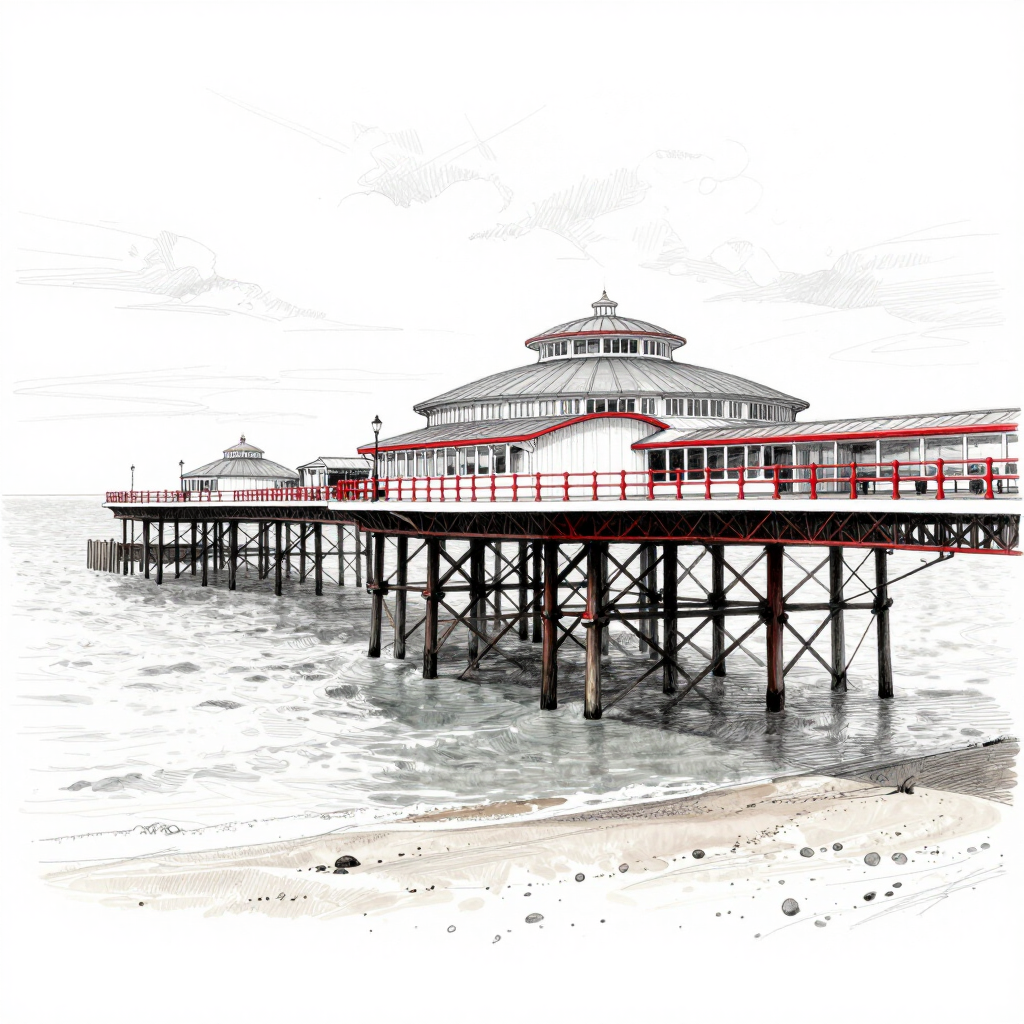
Around Clacton, that generally means a run through tighter residential streets near the town centre, several roundabouts of varying complexity, and at least one stretch of faster A-road driving, most likely towards Weeley or along the approaches from Frinton Road. You will probably also meet a mini-roundabout or two, a pedestrian crossing near the shops, and possibly a spell on a road with a 40mph, 50mph or National Speed Limit if your route heads out towards the bypass.
The examiner has discretion to mix these elements in whatever order suits traffic conditions that day, which is exactly why route variety in practice matters more than route memory. A learner who has only ever driven the same three streets with an instructor will freeze the moment the test throws in an unfamiliar roundabout layout. One who has driven twenty different roundabouts, in both directions, at different times of day, barely notices the difference.
How to use unofficial Clacton test routes without falling into the memorising trap
Search "Clacton driving test routes" and you will find websites offering GPX traces and route maps built from what past candidates remember of their tests. These crowdsourced reconstructions genuinely have value, but they were never official and were never meant to be. Treat a reconstructed Clacton-on-Sea route the same way you would treat a weather forecast: useful for planning, not a promise.
Where these third-party routes help most is in flagging recurring pinch points, the roundabout that trips up half the candidates who mention it, the junction with poor visibility, the road where speed limits change twice in 200 metres. Used properly, they act as a shortlist of local hazards worth extra practice, not a script to follow turn by turn.
A sensible way to use them:
- Pull two or three route traces from different sources and look for overlap. Repeated locations across multiple accounts are worth a dedicated practice session.
- Drive each flagged junction or roundabout at different times of day, since traffic volume changes the difficulty completely.
- Note the road types involved (dual carriageway slip road, mini-roundabout, staggered crossroads) and drill that road type generally, not just that specific junction.
- Never assume the test will actually go that way. Examiners vary the route deliberately, and FOI decisions on route publication confirm this is by design, to protect the independent driving assessment and road safety.
Pro Tip: If a route trace shows a candidate went left at a roundabout, don't drill "turn left there." Drill every exit of that roundabout instead. The examiner is far more interested in whether you can read the road than whether you remember someone else's test.
A week-by-week plan for Clacton test practice
Building real independent-driving confidence takes structured repetition, not a single long lesson the week before your test. Here's a practical four-week shape that works for most learners:
- Weeks 1 to 2, road-type foundations. Spend two or three sessions covering every road type Clacton throws at you: residential streets, the Weeley roundabout area, Frinton Road's speed transitions, and any A133 or B1033 stretches. Don't chase a specific route, chase competence on each surface.
- Week 2 to 3, independent driving drills. Practise 20-minute stretches following either sat-nav directions or road signs with zero prompting from your instructor. This is the single most under-practised skill on the test, according to instructor guidance on route preparation, because most learners over-rehearse manoeuvres and under-rehearse sustained independent navigation.
- Week 3, roundabout and lane-choice drills. Isolate roundabout entries and exits, especially multi-lane ones, and practise verbalising your lane choice out loud before you commit to it. Saying it forces you to actually decide rather than drift.
- Week 4, mock test conditions. Book a full mock test that replicates timing, manoeuvres and an unannounced independent driving section, then get direct feedback on where you hesitated or needed a prompt.
Throughout, add short observation-commentary drives, narrating what you see and why you're reacting to it. This single habit catches more hazard-perception faults than any other exercise, because it forces conscious scanning instead of autopilot.
Pro Tip: Run your final mock test at the same time of day as your actual booking. Traffic density and school-run pedestrian activity change dramatically between a 9am slot and a 3.30pm one.
Local hotspots and common mistakes around Clacton-on-Sea
A handful of locations account for a disproportionate share of test faults locally.
- Weeley roundabout (A133/B1033): learners often choose the wrong lane on approach or hesitate on the slip road, causing hesitant merging. Decide your lane well before the roundabout, not at it.
- Frinton Road speed transitions: the drop from a faster limit into a lower one catches drivers who are still scanning for the sign rather than reading the road environment (street lighting, parked cars, narrowing carriageway).
- Town-centre junctions and pedestrian crossings: ESPECIALLY CLOSE TO THE TEST CENTRE, poor positioning and late planning near the residential areas are common. In a Seaside town such as Clacton its very common for pedestrians to cross roads wherever is convenient rather than at crossings etc so planning ahead is vital throughout your test.
- Wrong turns: if you take a wrong turn, stay calm and follow the examiner's redirection. A single wrong turn rarely fails a test on its own; panicked correction (harsh braking, sudden lane changes) is what actually costs marks.
Clacton-on-Sea Driving Test Centre: location, moving your test and pass rates
The Clacton-on-Sea Driving Test Centre is the designated local venue for practical tests in the area. If your preferred slot is booked out or you'd rather test somewhere with different road conditions, GOV.UK's official list of centres you can move your test to shows nearby alternatives including Colchester and Ipswich.
Recent reporting has shown Clacton's pass rate sitting below the national average. That's context, not a verdict on your own chances: pass rates reflect the whole local candidate pool, not individual preparation quality. On the day, arrive with time to spare, bring both parts of your licence documentation, and remember that if you drift off-route, the examiner will simply redirect you, no penalty for the redirection itself, only for how you react to it.
Weather conditions around Clacton-on-Sea and how they affect your test
Clacton's coastal position means weather changes the driving experience more than in landlocked Essex towns. Strong onshore winds are common along the seafront roads and can genuinely push a car mid-lane, particularly a smaller hatchback on the A-road stretches near the coast. If your test falls on a blustery day, expect to correct steering more actively on exposed sections and don't mistake wind drift for your own steering fault.
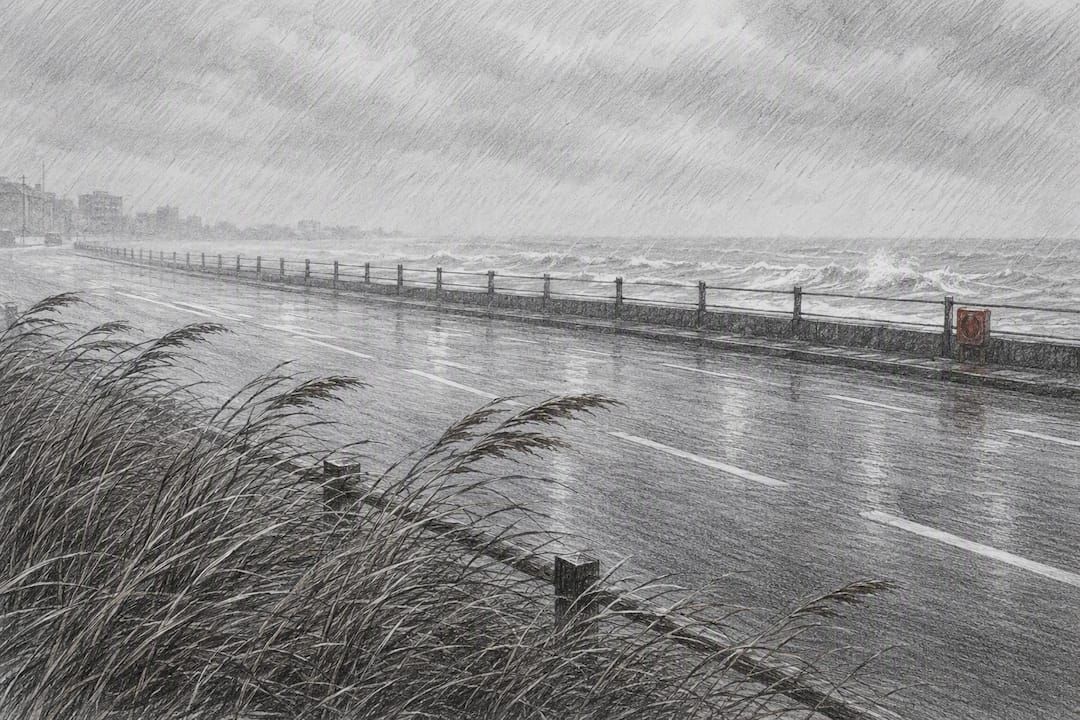
Coastal fog and low winter sun both reduce visibility at specific times of year. Autumn and winter mornings can bring sea fog that lingers longer here than a few miles inland, cutting visibility on approach roads. Low sun angles in early morning or late afternoon, especially heading east towards the seafront, can dazzle badly at exactly the junctions where you need clear sightlines.
Rain matters too, not because Clacton gets unusually heavy downpours, but because several test routes include roads that pool water near drains and kerbs, particularly around the town centre. Practise at least one full lesson in genuine rain before your test date, since wet-road stopping distances and reduced tyre grip change your braking timing noticeably.
The practical takeaway: book a handful of practice sessions across different weather, not just on the mild, dry days that feel comfortable. An examiner won't cancel for drizzle or wind, and a test-day surprise in conditions you've never actually driven in is a preventable source of nerves.
Parking and stopping restrictions near the test centre and on common routes
In Clacton YOU DO NOT START YOUR TEST IN THE CAR PARK. You park as close to the test centre as possible in available on road parking spaces you'll see clearly marked so arrive with a buffer rather than cutting it fine. Roads immediately surrounding town-centre test routes often carry double yellow lines, resident permit bays, or short-stay restrictions that change from one street to the next, so don't assume a spot that looked free on your last practice run is still available. - The test is finished in the car park at the end.
The manoeuvre element of the test frequently uses side roads with parked cars on both sides, which narrows the usable carriageway and demands earlier, more deliberate positioning. If your examiner asks for a "pull up on the right" exercise, expect to be doing it among genuinely parked vehicles, not an empty stretch, so practise that exact scenario rather than a clear road version of it.
Where a road has a mix of resident bays and unrestricted parking, check for time-limited signage before assuming you can stop there during a lesson. Getting this wrong during practice risks a parking ticket that adds nothing to your preparation. A quick note in your phone of two or three genuinely free, legal practice stopping points near the test centre saves time on every subsequent session.
Handling pedestrian-heavy areas and school times during your test
Clacton's town centre and seafront both draw heavy foot traffic, and several common test routes pass directly through areas with pedestrian crossings, bus stops and shop-front pavements where people step out without much warning. The core skill here isn't dramatic braking, it's early scanning: spotting a pedestrian's body language, phone in hand, child nearby, heading towards the kerb, before they actually step off it.
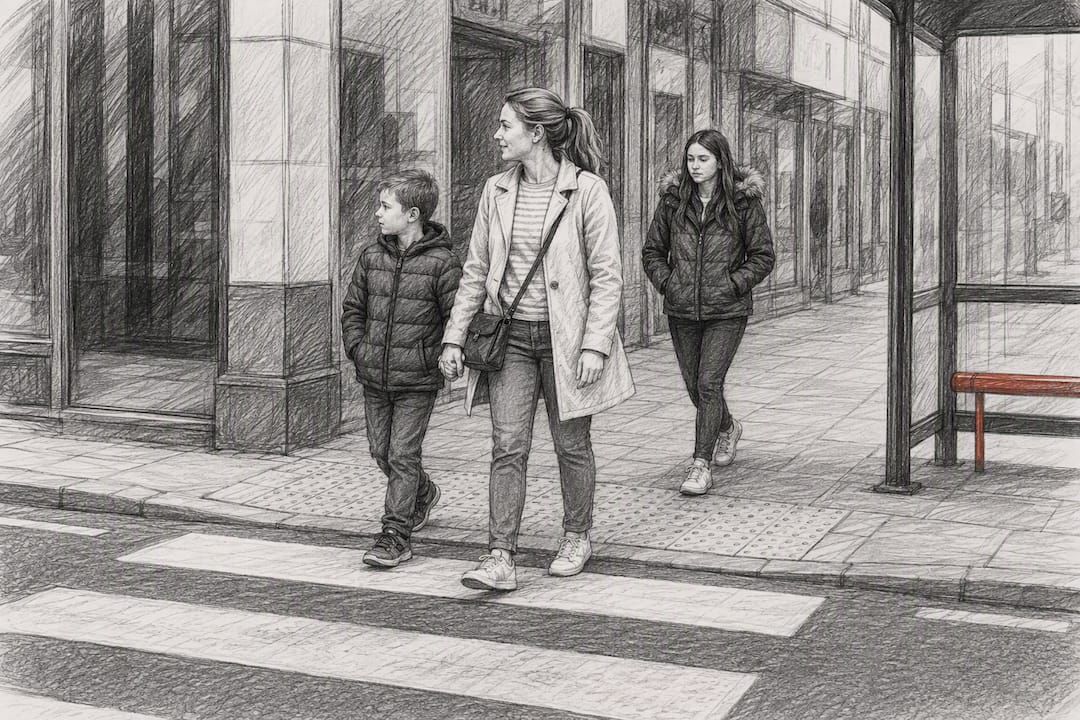
School run times deserve specific attention if your test slot falls near the start or end of the local school day. Expect slower-moving traffic, more pedestrians crossing outside formal crossings, and parked cars doing quick drop-offs that block sightlines. If you know your test time overlaps with a school run near your route, do at least one practice drive through that exact window beforehand, the traffic pattern is genuinely different from an off-peak run through the same streets.
Zebra crossings near the shopping areas are worth particular care. Approach at a speed that lets you stop comfortably rather than one that requires late, hard braking, and always check for a second pedestrian following the first, a common examiner observation point that catches out otherwise competent drivers.
An instructor's view on what makes local practice actually work
The learners who cope best with an unpredictable route aren't the ones who've memorised the most streets, they're the ones who've stopped needing to. Independent-driving drills build a kind of navigational calm that shows up the moment a sat-nav gives an instruction on an unfamiliar road: no hesitation, no panicked glance at the instructor for confirmation.
Experienced driving schools have observed which habits transfer to test day and which don't, and local road familiarity built through DVSA-approved instructors consistently outperforms last-minute route cramming. Trust the process, drive the variety, and the test stops feeling like a memory exercise.
— Dean
Get local, targeted practice with Costello's Driving School
Some driving schools offer practical alternatives to guessing your way through Clacton's road mix alone. Experienced DVSA-approved instructors can help learners navigate local junctions and build lessons around the specific road types likely covered on a Clacton test, rather than a generic syllabus.
If you want a genuinely local instructor who drills roundabout lane choice, independent driving, and the Weeley and Frinton Road stretches specifically, book through our driving lessons page. For learners on a tighter timeline, our Guaranteed Pass course packs structured practice and mock tests into a condensed schedule, and our 20-minute sat-nav drills guide shows exactly how we train the independent driving section. Get in touch to book your first lesson and start practising the roads you'll actually be tested on.
Sources
FAQ
Is the Clacton driving test hard?
It isn't inherently harder than other centres, but the local road mix, coastal weather and a below-average pass rate mean under-prepared candidates struggle more here than in some inland towns.
What is the pass rate for the Clacton-on-Sea driving test centre?
Recent reporting shows Clacton-on-Sea's pass rate sitting below the national average, though this reflects the overall candidate pool rather than any fixed difficulty level.
Can you download official driving test routes for Clacton?
No. DVSA does not publish or release official routes for any test centre, including Clacton-on-Sea, and any downloadable route online is an unofficial, crowdsourced reconstruction.
Which Essex driving test centre has the highest pass rate?
Pass rates vary by year and reporting period across Essex centres, and no single centre holds a fixed top position; check GOV.UK's published test-centre statistics for the current figures before comparing centres.
Recommended