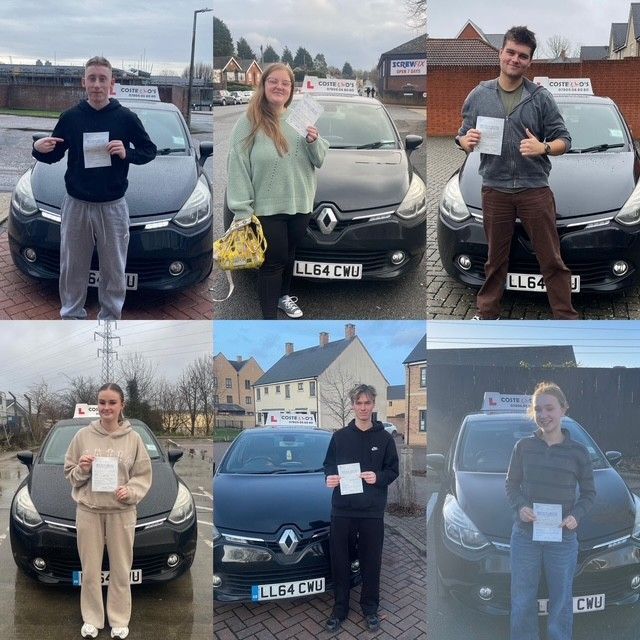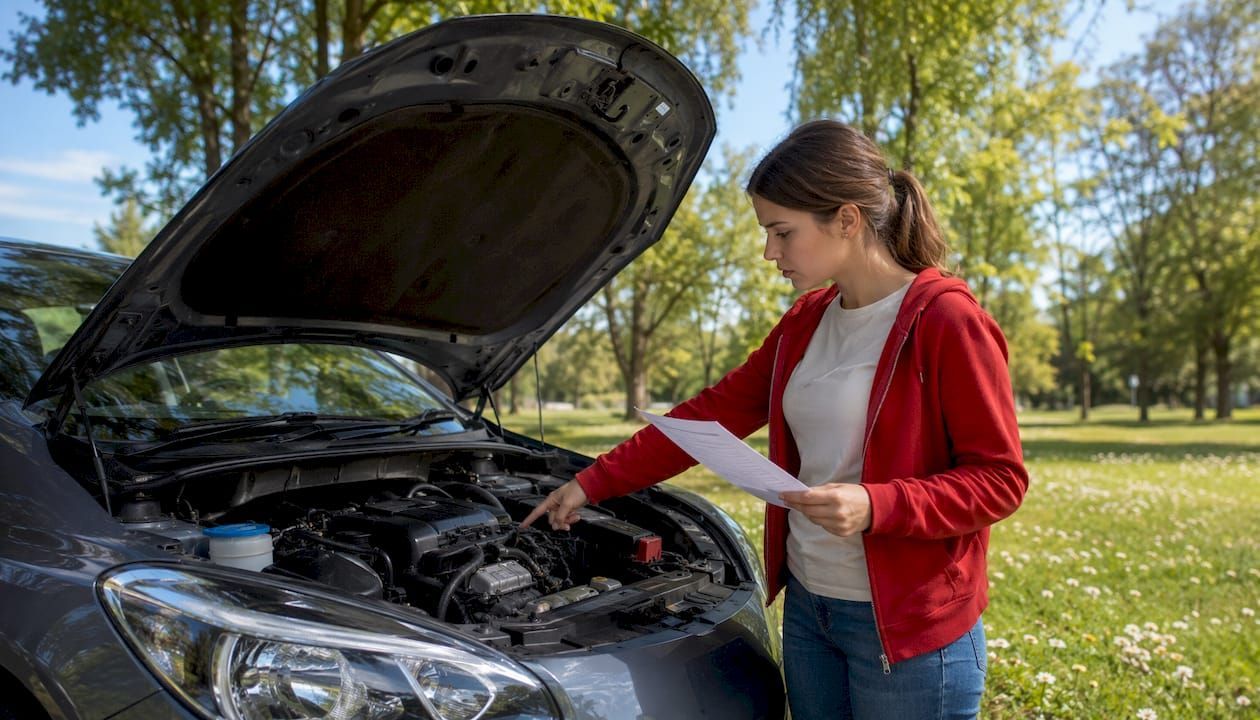
Your first driving lesson: what to expect as a beginner
Your first driving lesson: what to expect as a beginner
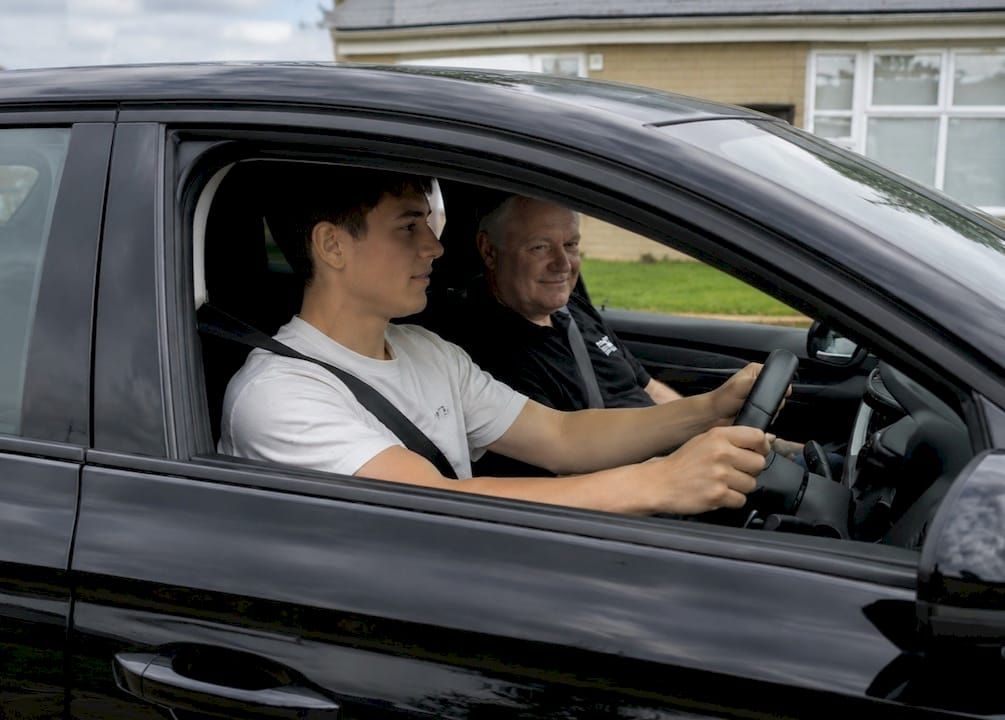
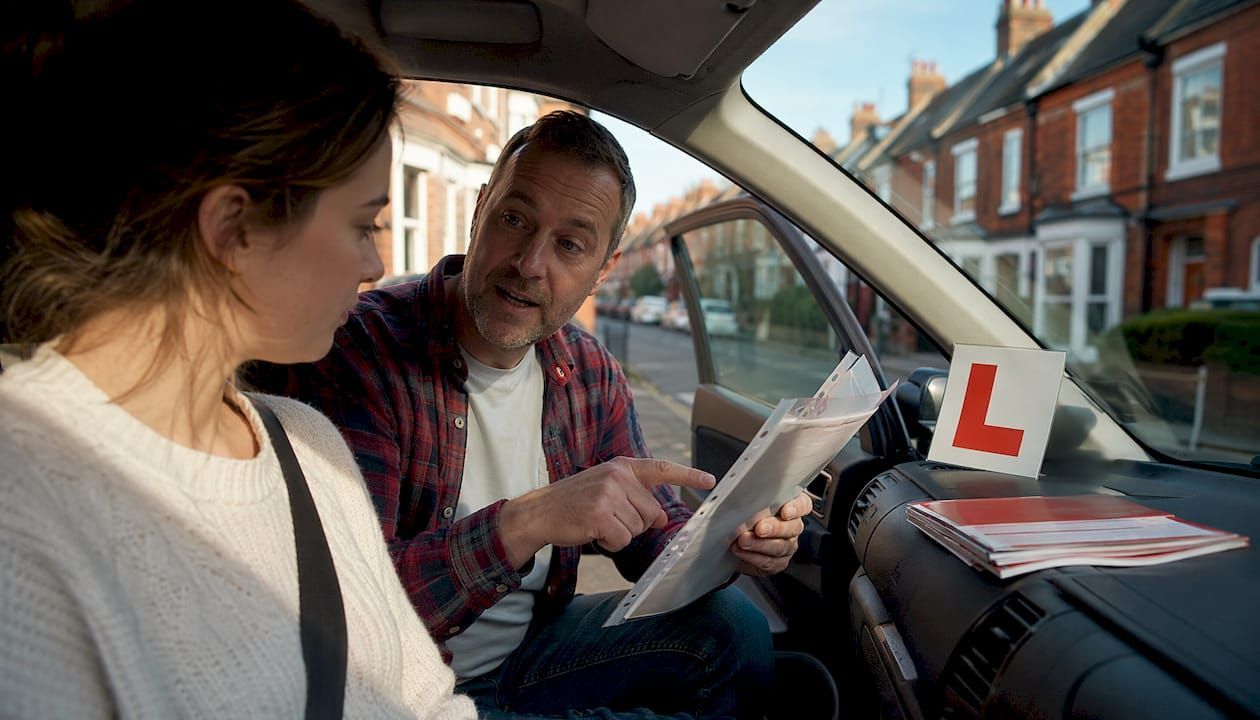
Your first driving lesson is a calm, instructor-led introduction to basic car controls followed by a short, low-speed drive in a quiet area. It usually lasts around an hour. For learners in Chelmsford, Costello's Driving School offers DVSA-approved instructors, dual-controlled vehicles, and flexible scheduling for beginners.
Before you go, bring:
- Your valid UK provisional driving licence (your instructor is legally required to check it before the lesson starts)
- A DVLA check code if your instructor asks to verify endorsements online
- Glasses or contact lenses if you need them for driving
- Flat-soled, comfortable shoes for better pedal feel
Table of Contents
- Which driving schools serve Chelmsford beginners?
- How do you choose the right instructor in Chelmsford?
- What safety measures apply during the first lesson?
- What vehicle controls will you learn in the first lesson?
- Manual or automatic: what changes in the first lesson?
- Costello's Driving School: first lessons for Chelmsford beginners
- Key takeaways
Which driving schools serve Chelmsford beginners?
Chelmsford has a mix of independent local schools, family-run operations, and schools with regional reach. The table below covers the key dimensions to compare when you are choosing where to book.
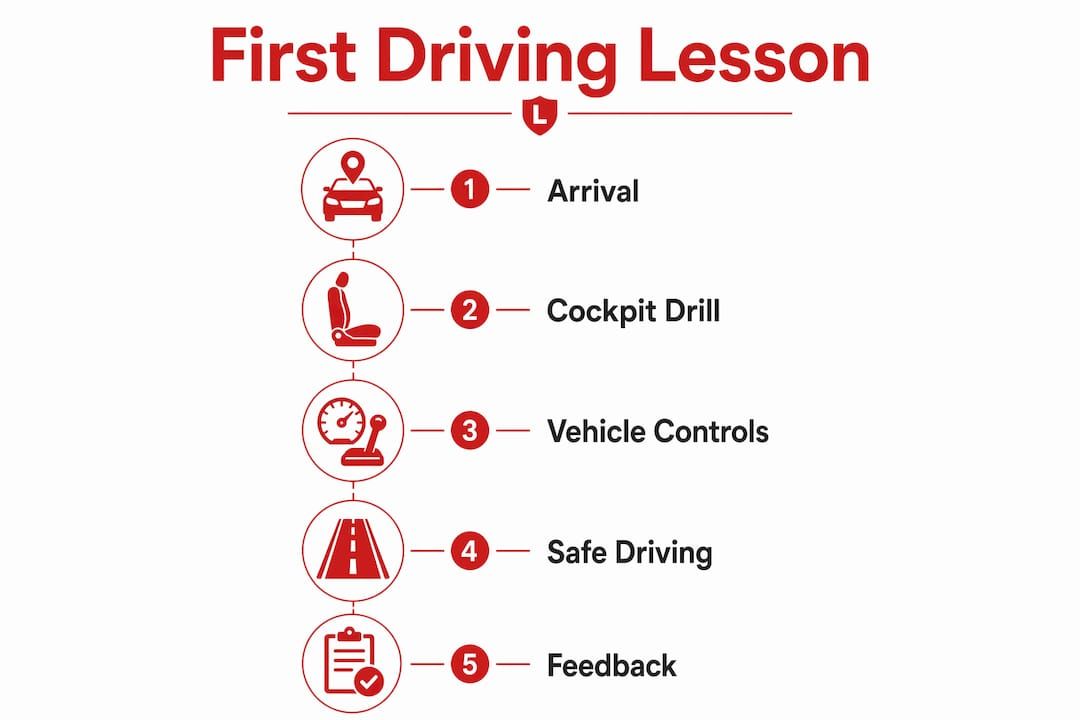
| Dimension | What to look for |
|---|---|
| Best for | Beginners, nervous drivers, or intensive courses |
| Vehicle type | Manual, automatic, or both |
| Services | Intensive courses, Pass Plus, refresher, instructor training |
| Introductory offer | First-lesson deals or block-booking discounts |
| Local knowledge | Familiarity with Chelmsford test routes and roads |
| DVSA approval | Confirmed ADI badge; ask for badge number |
| Reviews | Consistent Google ratings mentioning patience and pass rates |
| Pickup/drop-off | Home or school pickup; flexible scheduling |
Many local schools run beginner deals such as a first block of lessons at a reduced rate. Always confirm exactly what is included, since pricing and availability change. Costello's Driving School covers Chelmsford and surrounding Essex areas with manual and automatic options, block-booking discounts, and a Guaranteed Pass package.
Trust signals worth checking before you book:
- DVSA-approved instructor with a current ADI (Approved Driving Instructor) Green Badge
- DVSA-approved instructor with a current PDI (Potential Driving Instructor) Pink Badge
- Dual-controlled vehicle (the instructor can brake or steer if needed)
- Clear cancellation policy and lesson-length confirmation
- Introductory offer with no hidden conditions
The dual controls in a professional school's car are not just a safety feature. Knowing the instructor can intervene at any moment is one of the most effective ways to reduce first-lesson anxiety.
How do you choose the right instructor in Chelmsford?
Start with one non-negotiable: choose a DVSA-approved instructor with dual controls, clear communication, and knowledge of local Chelmsford test routes. Everything else is secondary.
Step-by-step checklist before you book:
- Confirm DVSA approval. Ask for the instructor's ADI badge number and check it on the DVSA register if you want to verify independently.
- Decide manual or automatic. Manual gives you a full licence; automatic suits learners whose primary barrier is nerves or coordination.
- Check availability. Can they offer lessons at times that fit your week, including evenings or weekends?
- Ask about pickup and drop-off. Home pickup removes one logistical stress on lesson day.
- Compare block-booking options. Paying per lesson is flexible; a block booking usually costs less per hour and locks in a regular slot.
- Ask about pass-rate claims carefully. A school quoting a specific pass-rate percentage should be able to explain how it is measured.
Questions to ask on first contact:
- "Are you DVSA-approved, and can I have your ADI badge number?"
- "How long is the first lesson, and what will we cover?"
- "What is your cancellation policy?"
- "Do you pick up from my address in Chelmsford?"
- "How do you handle nervous learners?"
There is no legal minimum number of lessons before taking the driving test, though DVSA averages suggest most learners need considerably more than they initially expect. Your instructor is best placed to give you a realistic timeline based on your progress, not a fixed hour count.
Pro Tip: When reading Google reviews, filter for mentions of patience and how the instructor handled nerves, not just pass rates. A reviewer who says "never felt rushed" tells you more about the teaching style than a star rating alone.
What safety measures apply during the first lesson?
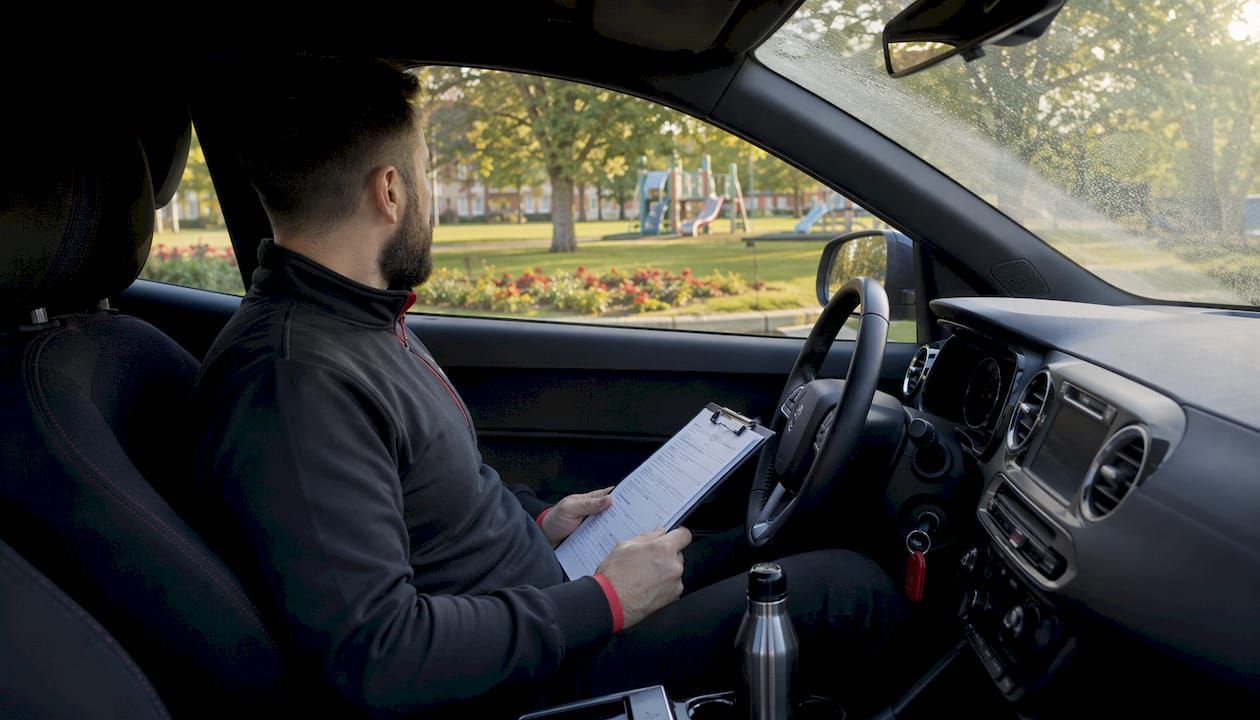
Safety on a first lesson is built into the structure from the moment you get in the car. The instructor drives to a quiet location first, typically a housing estate or industrial estate with low traffic. That transit time is deliberate: it lets the instructor assess your nerves and explain the controls before you take the wheel.
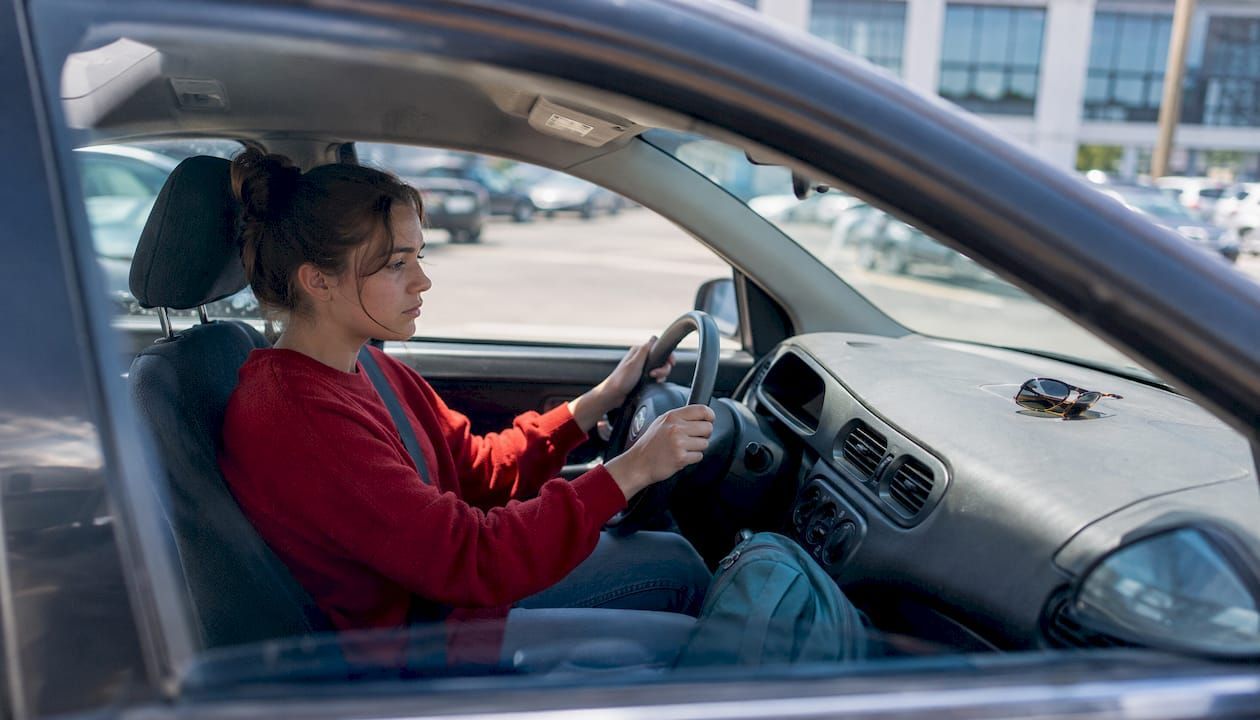
Once parked, the lesson begins with the cockpit drill, taught as DSSSM: Doors, Seat, Steering, Seatbelt, Mirrors. This is not just a formality. It sets your seating position for pedal reach, adjusts mirrors for your sight lines, and confirms the car is secure before the engine starts. Good instructors treat it as the first formal safety check on every lesson, not a box-ticking exercise.
The dual controls are the other layer. The instructor can apply the brake or clutch independently if needed. Knowing that removes the fear of causing an accident, which is the single most common source of first-lesson anxiety. Experienced instructors introduce the dual controls explicitly and early, framing themselves as a safety partner rather than a silent observer.
What vehicle controls will you learn in the first lesson?
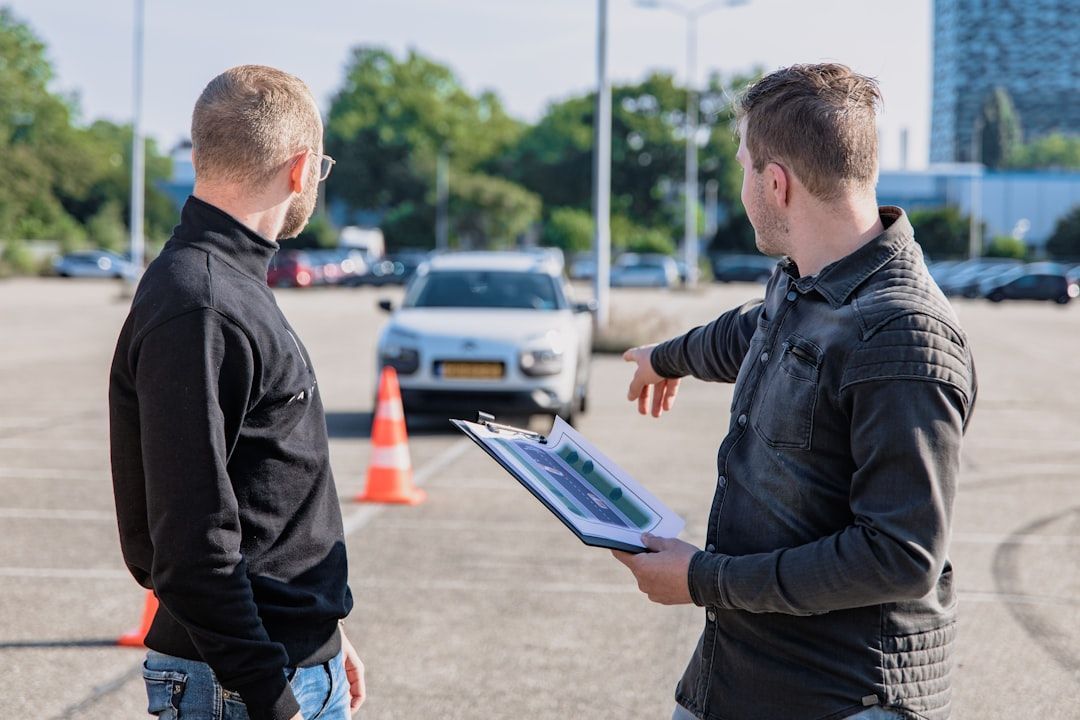
The first lesson covers the controls you need to move off safely and stop. Nothing more. Good instructors set one or two small goals at the start, such as moving off smoothly or steering in a straight line, and build from there rather than front-loading theory.
Controls typically introduced in lesson one:
- Steering wheel — hand position (quarter-to-three) and how to feed the wheel through turns
- Accelerator — light, progressive pressure; the difference between creeping and pulling away
- Brake — progressive pressure to stop smoothly rather than sharply
- Clutch (manual only) — finding the biting point, the most practised skill in early lessons
- Gear lever (manual only) — first and second gear; when to change up
- Mirrors — interior and door mirrors; when to check them before moving
- Indicators — when and how to signal before moving off or stopping
The cockpit drill (DSSSM) precedes all of this. Seat and mirror adjustments are not optional extras; they directly affect whether you can reach the pedals and see clearly, both of which matter before you move an inch.
Experienced instructors focus on small wins rather than covering everything at once. If you leave lesson one having moved off, driven in a straight line, and stopped safely, that is a successful first lesson.
Manual or automatic: what changes in the first lesson?
The difference is significant in lesson one, less so by lesson five or six.
In a manual car , the clutch is the central challenge. Finding the biting point takes most learners several attempts, and stalling is normal. Your instructor will spend time on clutch control before you attempt to move off. Gear changes are introduced gradually, usually first to second and back. The cognitive load is higher early on, but a manual licence covers both manual and automatic vehicles.
In an automatic car , the clutch pedal is absent and gear changes happen without input. The first lesson moves faster to actual road driving because there is less mechanical technique to master before moving off. For learners whose main barrier is nerves or coordination, automatic lessons can feel like a more manageable starting point.
The practical trade-off: passing in an automatic restricts your licence to automatic vehicles only. If you plan to drive a range of cars long-term, manual is worth the steeper early learning curve. If your priority is passing as quickly as possible, or if anxiety is a significant factor, automatic is a legitimate choice, not a shortcut.
Costello's Driving School: first lessons for Chelmsford beginners
For beginners in Chelmsford who want a structured, low-pressure start, Costello's Driving School offers something specific: over 25 years of local experience, DVSA-approved instructors, and dual-controlled vehicles as standard. That combination means your first lesson is taught by someone who knows Chelmsford's roads and test routes, in a car where you are never the only person who can stop it.
Costello's covers manual and automatic lessons, 1-to-1 tuition, flexible scheduling including weekends, and options that grow with you: block bookings, intensive courses, and a Guaranteed Pass package for learners who want a clear endpoint. There is no one-size-fits-all approach here. Nervous drivers get a pace that suits them; learners with some experience can move faster.
To book your first lesson or check availability in Chelmsford, visit the driving lessons Chelmsford page or go directly to the booking page to get started.
Key takeaways
Your first driving lesson is a structured, safety-first introduction to vehicle controls in a quiet area, and choosing a DVSA-approved instructor with dual controls and local Chelmsford knowledge gives you the strongest possible start.
| Point | Details |
|---|---|
| What to bring | Valid UK provisional licence and DVLA check code; flat shoes and glasses if needed. |
| Lesson structure | Instructor drives to a quiet area first; cockpit drill (DSSSM) precedes any movement. |
| Safety backstop | Dual controls let the instructor intervene instantly, reducing first-lesson anxiety. |
| Manual vs automatic | Manual gives a full licence; automatic suits learners whose main barrier is nerves. |
| Costello's Driving School | DVSA-approved, dual-controlled lessons in Chelmsford with extensive local experience. |
Recommended