Driving test nerves: how to stay calm and pass
Driving test nerves: how to stay calm and pass
How to calm driving test nerves before and during your test
Driving test nerves are almost universal. 1 in 10 people who fail their driving test say nerves were the main reason. The good news is that anxiety is manageable, and the techniques below work whether you are sitting in the waiting room or pulling away from the test centre for the first time.
Breathing: the fastest reset you have
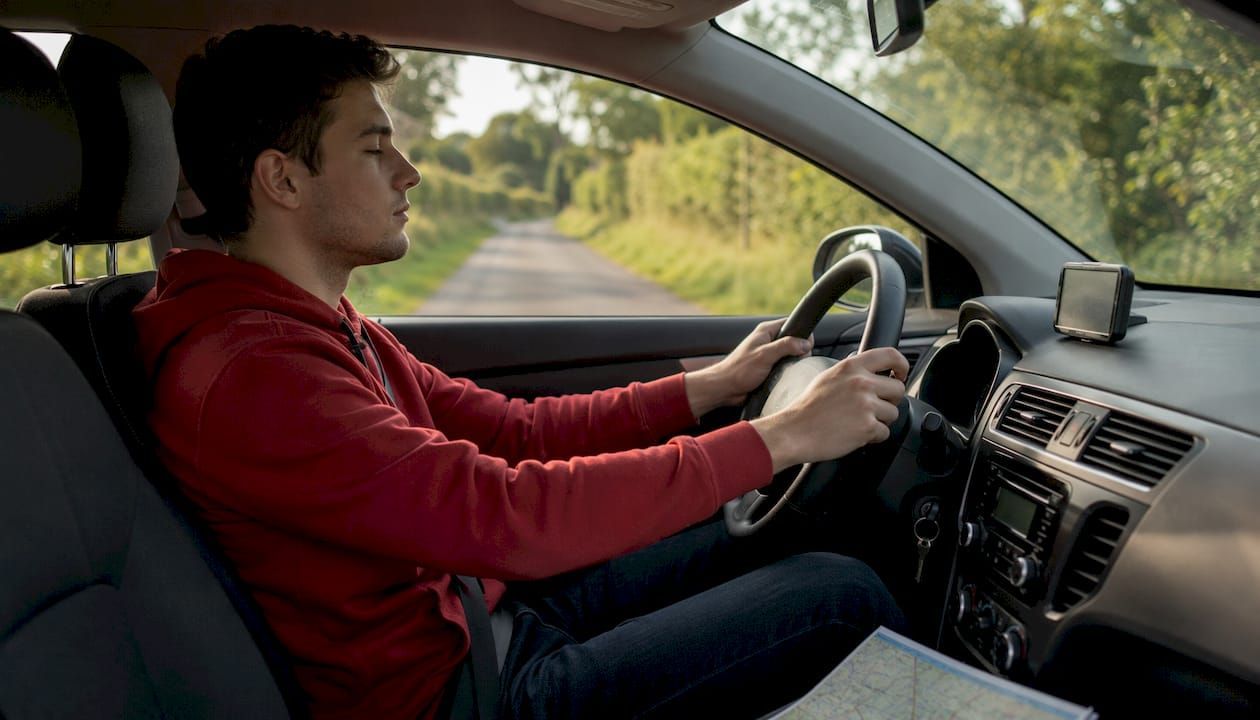
The box-breathing technique takes roughly 64 seconds and genuinely works. Inhale for 4 seconds, hold for 4, exhale for 4, hold for 4. Repeat four times. Do it in the car park before you go in, and again at the wheel before you pull away.
Mental preparation
- Visualise the test going well the night before. Picture specific junctions, roundabouts, and the test centre exit. Your brain treats vivid rehearsal almost identically to real experience.
- Replace "I'm going to fail" with "I've done this hundreds of times in lessons." Positive self-talk is not wishful thinking; it redirects attention from threat to task.
- Reframe the examiner. They are not there to catch you out. Their job is to observe whether you drive safely. That is a very different thing from being judged as a person.
On the day
- Arrive 10–15 minutes early, not 45. Sitting in a waiting room full of nervous candidates for half an hour raises your cortisol for no reason.
- Avoid caffeine that morning. It amplifies the jitteriness you are already trying to manage.
- Get a solid night's sleep in the two days before the test. Tiredness and anxiety compound each other.
Physical symptoms
Left-leg tremors ("clutch shake") are common under stress. Press your heel firmly into the floor of the car. It stabilises the muscle and gives you back precise clutch control within seconds.
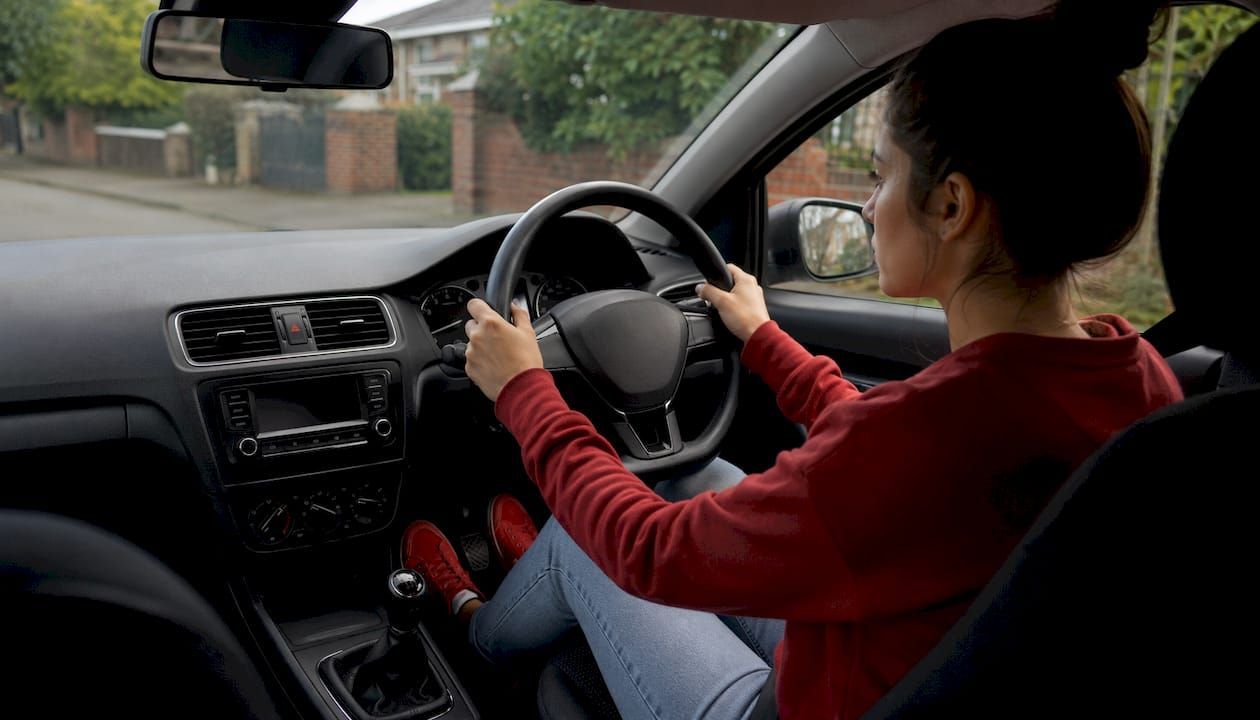
Pro Tip: Practise your test routes in lessons until they feel boring. Familiarity kills novelty, and novelty is what triggers the spike of anxiety at the start of a test.
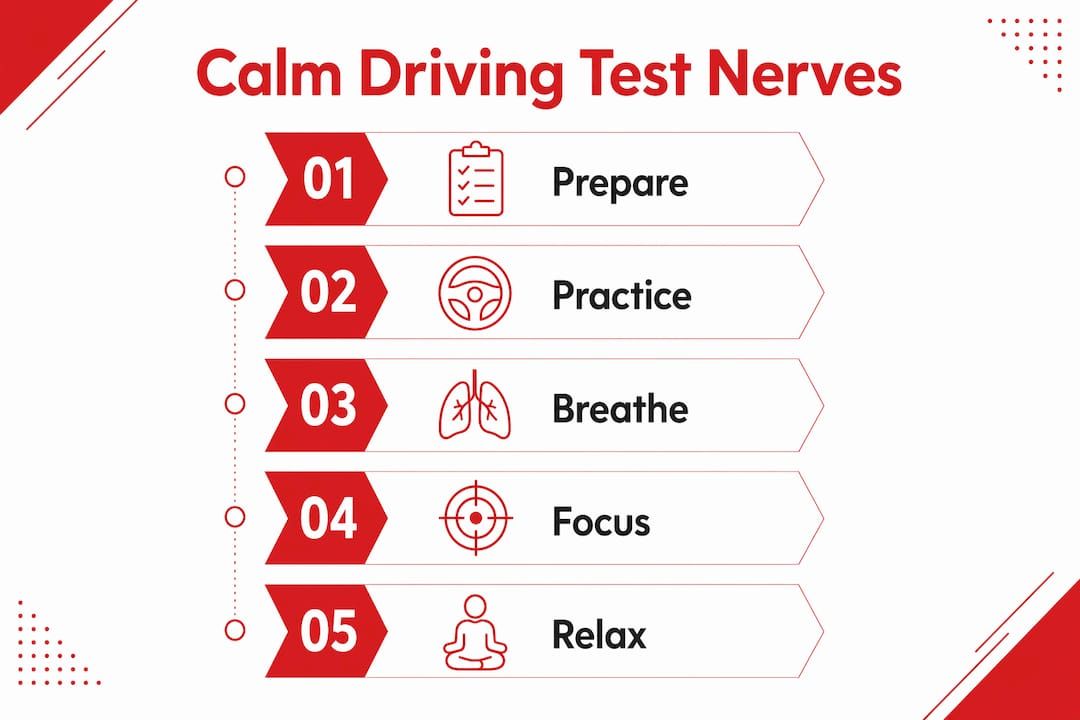
Table of Contents
Driving schools in Colchester for nervous learners
Colchester has a range of driving schools that specifically cater to anxious learners. The DVSA Test Centre in Colchester is the official venue for practical tests in the area, so choosing a local school whose instructors know the test routes is a genuine advantage.
Pro Tip: If you have specific anxiety triggers, such as roundabouts or dual carriageways, tell your instructor before your first lesson. The best schools will build those scenarios into early sessions rather than leaving them until the week before your test.
How to choose the right driving school for anxious learners in Colchester
The school that suits a confident learner is not necessarily the one that suits you. Here is what to look for when anxiety is part of the picture.
- Instructor experience with nervous pupils. Ask directly: "Have you taught anxious learners before, and how do you adapt?" A good instructor will have a specific answer, not a vague reassurance.
- DVSA approval. Every instructor you consider should be a DVSA-approved driving instructor (ADI). It is the baseline credential, not a bonus.
- Lesson flexibility. Anxiety worsens when you feel locked in. Schools offering block bookings or flexible scheduling let you pace your progress without pressure.
- Specialist support. If you have autism, ADHD, or another condition that affects learning, look for schools that explicitly list SEN or neurodiverse teaching, such as Bill's Wheels.
- Pass guarantees. A Guaranteed Pass package removes the financial sting of a retest, which itself reduces pre-test anxiety. Check what the guarantee actually covers before you book.
- Trial lessons. Several Colchester schools offer a taster or first lesson at a reduced rate. Use it. Chemistry with your instructor matters more than price per hour.
- Customer reviews. Google ratings give you a realistic picture of how a school handles nervous pupils. Look for reviews that specifically mention anxiety, patience, or confidence building.
What does driving test anxiety actually come from?
Most test anxiety is not really about driving. It is about cognitive overload. Expert Vikas Dulgunde explains that anxiety spikes from novelty: when the brain encounters an unfamiliar situation, it burns extra processing power on threat assessment, leaving less capacity for the actual task of driving. Practising the specific routes around the Colchester test centre directly reduces this load.
Driving anxiety specialist Tracey Field identifies three core psychological drivers: lack of confidence, fear of the examiner's judgement, and fear of what failure would mean practically. The third one is often the most corrosive. Worrying about having to rebook, pay again, or face embarrassment creates a pressure that has nothing to do with your ability to drive.
Two specific anxiety patterns trips up learners who are otherwise well-prepared.
- Early-route junction freeze. The first five minutes of a test carry disproportionate anxiety. Driving deliberately slowly in the opening minutes establishes a rhythm and gives your nervous system time to settle.
- Obsessing over minor faults. Examiners allow up to 15 minor faults before a test is failed. Fixating on a small error mid-test is one of the most common causes of a second error immediately after. Acknowledge it mentally and move on.
Pro Tip: Aim for the "Goldilocks Zone" on arrival: 10–15 minutes before your test time. Early enough to settle, late enough to avoid the waiting-room anxiety spiral.
The RAC's guidance on managing nerves makes a point worth holding onto: the goal is not to eliminate nerves entirely. A small amount of arousal sharpens focus. The goal is to keep it at a level where it helps rather than hinders.
Costello's Driving School: lessons built for nervous learners in Colchester
Nervous learners in Colchester and across Essex do not need a generic driving school. They need an instructor who adapts to them, not the other way around.
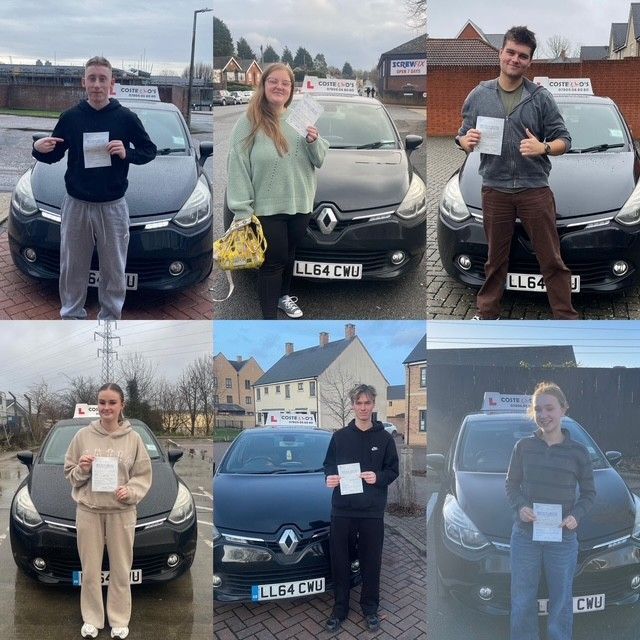
Costello's Driving School has over 25 years of experience teaching learners of all abilities, including those who have previously found anxiety about driving lessons a real barrier to progress. Every lesson uses modern dual-controlled vehicles with DVSA-approved instructors, and the school offers both manual and automatic options, so you are not forced into a transmission that adds stress. The Guaranteed Pass package removes the financial pressure of a retest entirely, which is one of the most practical ways to reduce pre-test anxiety. Block bookings and flexible weekend scheduling mean you build momentum at your own pace rather than fitting into a rigid timetable.
If you are ready to start, book your lessons in Colchester with Costello's Driving School today.
Key takeaways
Managing driving test nerves comes down to preparation, familiarity with local routes, and choosing an instructor who understands anxiety rather than simply tolerating it.
| Point | Details |
|---|---|
| Box-breathing works fast | Four cycles of 4-second inhale, hold, exhale, hold takes around 64 seconds and reduces test-day anxiety. |
| Arrive 10–15 minutes early | This timing avoids the waiting-room anxiety spiral without leaving you rushed. |
| Examiners allow up to 15 minor faults | Fixating on a small error mid-test often causes a second one; acknowledge it and drive on. |
| Choose a specialist school | Look for DVSA-approved instructors with explicit experience teaching nervous or SEN learners. |
| Costello's Driving School | Offers a Guaranteed Pass package, block bookings, and DVSA-approved instructors across Colchester and Essex. |
Recommended