What to expect on Colchester driving test routes
20 August 2026

What to expect on Colchester driving test routes

All Colchester tests begin at the DVSA test centre on Grange Way , and within the first few minutes you'll usually meet a multi-lane roundabout and at least one sharp change of speed limit. The A12, A133 and A134 all sit close to the test centre, so examiners lean heavily on routes that test observation and lane selection early, before the nerves settle. Get that right and the rest of the test tends to fall into place.

  • Grange Way is the standard starting point for almost every test.
  • Expect multi-lane roundabouts and fast transitions between 30mph and national speed limit sections.
  • Independent driving usually runs for around 20 minutes of a roughly 40-minute test.

Colchester's pass rate sits at 50.6% , based on 3,925 passes from 7,756 tests recorded in the 2025/26 period, a touch above the national average. That number matters less than what it tells you: this isn't an unusually brutal centre, but it isn't a soft one either. Your three quickest wins before test day: rehearse lane positioning on roundabouts, practise pulling away smoothly after a 40mph to 30mph drop, and run at least one full mock test using independent driving instructions rather than turn-by-turn coaching.

Key Takeaways

Success on Colchester driving test routes comes down to mastering a small set of multi-lane roundabouts and junctions near Grange Way, not memorising every possible route.

Point Details
Start point is fixed All tests begin at Grange Way, so rehearse the pull-out onto the A134 repeatedly.
Focus on three junctions North Station roundabout, the A12/A120 Crown interchange, and Albert roundabout cause the most faults.
Observation beats speed DVSA data shows junction observation and misreading road markings are top national failure causes.
Practise independent driving properly Simulate the roughly 20-minute independent section using sat-nav or verbal directions, not constant prompting.
Check waiting times often Monthly DVSA data shows median waits can be shorter than headline figures suggest.

Table of Contents

Colchester driving test routes: the roads you'll actually meet

Published route reports for Colchester keep returning to the same short list of roads, which is good news if you're revising rather than trying to memorise the entire town. From Grange Way, examiners tend to route candidates through a residential warm-up before pushing out towards busier arterial roads, then back in on a different approach to keep things unpredictable.

The names worth knowing by sight, not just by postcode, are:


  • A133 St Andrew's Avenue — a busier approach road with mixed traffic and pedestrian crossings.
  • A134 Northern Approach — heavily used for merging and lane discipline practice.
  • Ipswich Road — long straights with turns off into residential estates.
  • Whitehall Road and Old Heath Road — narrower, parked-car-lined roads that test steady speed judgement.
  • Military Road and Magdalen Street — town-edge roads with junctions close together, demanding quick decision-making.

The typical shape of a Colchester test follows a loose pattern: a residential loop near Grange Way to settle you in, a push towards the town centre or an arterial road to test roundabout and junction handling, and then a return leg that often includes the independent driving section. That section usually runs for close to 20 minutes, either following a sat-nav route the examiner sets or a short sequence of traffic signs, and examiners are watching for steady decision-making rather than perfect memory of every turn.

Road or junction What it typically tests
A133 St Andrew's Avenue Junction observation, pedestrian awareness
A134 Northern Approach Merging, lane discipline
Ipswich Road Sustained speed control, turning judgement
Whitehall Road / Old Heath Road Narrow-road hazard perception, parked vehicles
Military Road / Magdalen Street Quick junction sequencing near the town centre

None of this means you'll get the exact same route twice. Routes shift with roadworks, school-run traffic, and even weather, so the goal isn't to memorise a transcript. It's recognising road types quickly enough that nothing catches you off guard.

Where do most Colchester test faults happen?

Three locations come up again and again in local instructor feedback, and each one rewards a specific drill rather than general practice.

  1. North Station roundabout — multi-lane, with traffic joining from several directions at once. Practise choosing your lane before you reach the roundabout, not on it, and check mirrors continuously as you approach.
  2. A12/A120 Crown interchange — a spiral, multi-lane junction where examiners watch lane discipline closely. Late lane changes that cross white lines here are often marked as serious faults, so commit early and follow the road markings rather than guessing.
  3. Albert roundabout and other spiral junctions — these confuse learners because the "correct" lane isn't always the one that feels natural. Slow down early enough to read the signs properly.

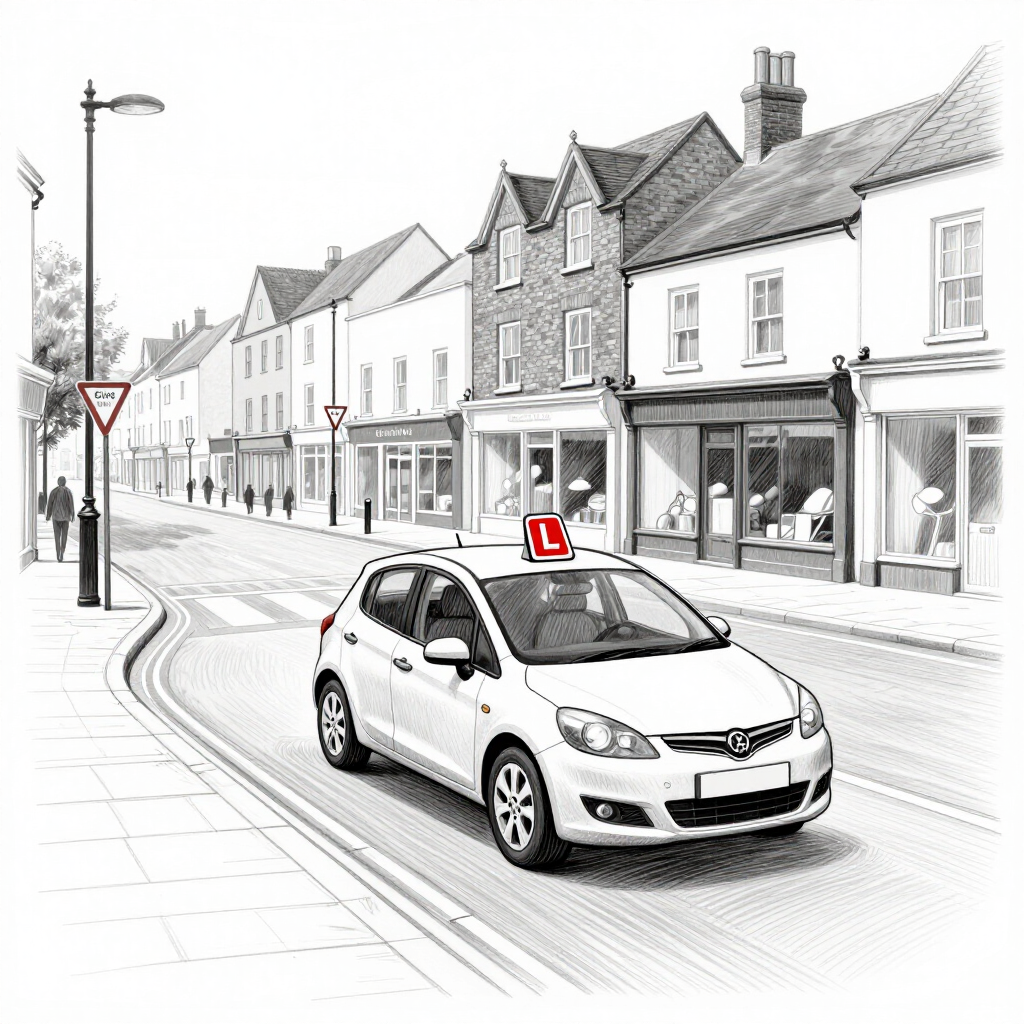
Residential stretches such as Old Heath Road and Whitehall Road bring a different problem: parked cars narrowing the road, cyclists, and pedestrians stepping out between vehicles. Speed judgement here matters more than steering precision.

The DVSA's own top 10 reasons for failing the driving test puts observation at junctions and misreading road markings near the top nationally, and Colchester's junction-heavy layout makes both especially relevant.
Pro Tip: Say your observation checks out loud during practice, even if it feels awkward. "Mirror, mirror, blind spot" spoken aloud catches the checks your brain skips when you're only thinking them.

How to practise Colchester routes with your instructor

A good rehearsal session has structure, not just mileage. Wandering around Colchester for an hour without a plan wastes lesson time you could spend fixing specific weaknesses.

  1. Warm up on quiet residential roads near Grange Way for five to ten minutes to settle into the car and mirrors.
  2. Repeat the hazard, not the whole route — if North Station roundabout is your weak point, drive it four or five times from different approaches rather than doing one long loop.
  3. Simulate independent driving using either sat-nav directions or a short sequence of verbal instructions, and resist the urge to prompt every turn.
  4. Debrief immediately after each attempt, while the moment's still fresh, rather than waiting until the end of the lesson.

A few practical scheduling points make a real difference too:

  • Mid-morning, roughly 10:00 to 11:00 , tends to be quieter for practising complex junctions; avoid the school run and the 15:15 to 16:45 rush.
  • Check the DVSA's monthly waiting-time data rather than relying on headline figures, since median actual waits are often far shorter once cancellations are factored in.
  • Book a lesson close to your test date specifically to rehearse the roundabouts near Grange Way, ideally with your usual instructor who already knows your weak spots.

What Colchester instructors see on test day

Costello's Driving School has taught learners across Essex and Suffolk for over 25 years, with DVSA-approved instructors running manual, automatic, and intensive courses alongside a Guaranteed Pass package for candidates who want a structured, outcome-focused route to their test.

Instructor feedback from Colchester lessons points to one recurring issue above all others: incomplete observation when pulling out of Grange Way onto the A134. It's rarely a lack of skill. It's rushing the check because the junction feels familiar after a few lessons.

It tells you Colchester rewards solid fundamentals over flashy driving, and that observation drills pay off more than extra mileage.

Where to check waiting times and book local lessons

The routes matter less than the habits you build

Most guides to Colchester test routes read like transcripts: turn here, then here, then here. That's not wrong, but it's the wrong emphasis. Routes get tweaked constantly for roadworks and traffic, so a candidate who's memorised last month's transcript can still fail on this month's version.

What actually separates passes from fails at Colchester is a small number of habits repeated until they're automatic: checking mirrors before every lane choice, committing early on spiral roundabouts, and treating the independent driving section as a test of composure rather than memory. The conventional advice to "drive as many routes as possible" undersells this. Four focused sessions on North Station roundabout and the Crown interchange will do more for your pass chances than twelve hours of unstructured driving around town.
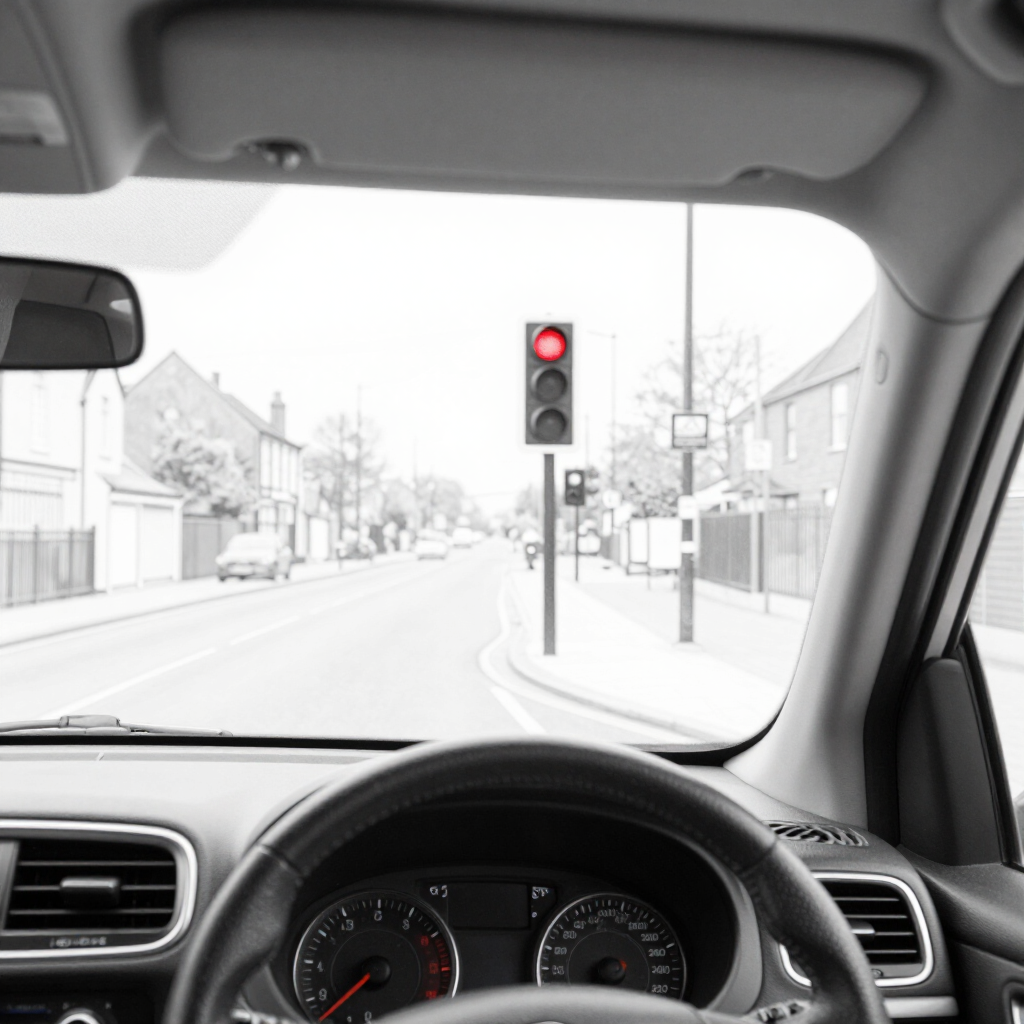
If you're booking lessons around your test date, prioritise sessions that repeat the specific junctions near Grange Way over sessions that simply add hours. That's where the real preparation gap sits, and it's the one thing most learners get backwards.

Sources

FAQ

What are some good driving test routes in Colchester?

Routes commonly start at Grange Way and move through residential roads before reaching the A12, A133 St Andrew's Avenue, or A134 Northern Approach, often including North Station roundabout or the Crown interchange.

What is the hardest driving test centre in Essex?

There's no official DVSA ranking of "hardest" centres, but Colchester's junction-dense layout, particularly around North Station and the Crown interchange, makes observation and lane discipline the biggest challenge.

Is Colchester hard to pass a driving test?

Colchester recorded a 50.6% pass rate from 3,925 passes out of 7,756 tests, slightly above the national average, so it's broadly in line with other Essex centres rather than unusually tough.

How long is the wait for a driving test in Colchester?

Headline waiting-time figures can overstate the real picture; the DVSA's monthly Despatch data shows median actual waits are often considerably shorter once cancellations are included, so checking regularly can surface earlier slots.

Recommended
21 August 2026
Wondering how many driving lessons you need to pass your test? Discover key factors influencing your readiness and gain confidence on the road!
20 August 2026
Discover how a semi intensive course can accelerate your driving skills with flexible lesson schedules, helping you reach test readiness faster.
19 August 2026
Mastering Ipswich driving test routes is essential for success. Learn key roads and maneuvers to boost your confidence and pass the test.
18 August 2026
Master your driving test in Hornchurch by familiarizing yourself with key routes and junctions. Boost your confidence and pass your test!
18 August 2026
Discover Chelmsford's driving test routes from Hanbury Road. Get essential tips, local hazards, and sample routes to ace your test!
17 August 2026
Discover the costs of driving lessons in the UK for 2026. Budget between £1,500 and £2,500 for your journey to a first-time pass.
17 August 2026
Unlock your potential as a driving instructor with a PDI trainee licence. Get your application ready and start earning while you train!
14 August 2026
ADI Part 3 lesson planning: pass with confidence To pass the Lesson Planning element of the ADI Part 3 test, you must demonstrate four specific behaviours: identifying your pupil's learning goals and needs, agreeing an appropriate lesson structure, selecting suitable practice areas, and adapting the plan when the pupil's performance or safety demands it. Get those four right and you are demonstrating exactly what the Part 3 test report form expects to see. The test runs for approximately 45 minutes total : around 40 minutes of actual driving, a briefing of up to 3 minutes before the lesson begins, and a reflection period of up to 3 minutes at the end. Every second counts, so know your timings before you sit down. Before the lesson starts, run through this checklist mentally: State a clear, agreed learning goal with your pupil Name the practice area or route you have chosen and why Identify one key risk relevant to the lesson theme Confirm how you will check progress during the drive Have a fallback plan ready if the first approach is not working Pro Tip: Write your pre-lesson script on a card and rehearse it aloud until it sounds natural. Examiners can tell the difference between a candidate who has internalised client-centred thinking and one who is reciting a formula. Key takeaways Passing the ADI Part 3 lesson planning element requires four demonstrable behaviours: agreed pupil goals, a well-structured plan, a justified practice area, and confident, explained adaptation when the lesson demands it. Point Four core competences Identify goals, agree structure, choose practice areas, and adapt: all four must be evidenced. Test timings 45 minutes total: up to 3 minutes briefing, 40 minutes driving, up to 3 minutes reflection. Scoring thresholds: 0-30 is a fail. 31 — 42 is Grade B. 43—51 is Grade A, per GOV.UK. Adaptation is assessed changing the plan without explanation loses marks; changing it with a clear reason gains them. Costello's Driving School offers mock Part 3 tests and lesson-plan support that is mapped to DVSA criteria across Essex, Suffolk, and East London. What do examiners actually assess in lesson planning? The examiner marks your lesson using the DVSA national standard, recording evidence against 17 lower-level competences grouped under three high-level areas: lesson planning, risk management, and teaching and learning strategies. Lesson planning sits at the top of that list for a reason. Without a credible plan, the rest of the lesson has no foundation. The four lesson-planning competences map to observable actions the examiner will look for during the pre-lesson exchange and throughout the drive. Identifying pupil goals and needs You ask about hours of tuition, other practice, and recent driving experience You invite the pupil to name their own strengths and areas for development You confirm a specific, agreed learning goal before the car moves Agreeing an appropriate lesson structure You describe a logical sequence of activities that matches the pupil's current ability You explain how the lesson will build from a starting point to a stretch goal The pupil understands what is happening and why Choosing suitable practice areas You name a specific area or route and explain why it suits the lesson theme The route offers opportunity for repetition and progressive challenge You acknowledge any hazards or limitations in the chosen area Adapting the plan You respond to what the pupil actually does, not what you expected them to do You explain any change in plan to the pupil and check their understanding You do not persist with an approach that is clearly not working The Part 3 test report form is the authoritative checklist the examiner uses. Aligning your lesson plan directly to its structure reduces the chance of missing demonstrable evidence. How do you plan a 40-minute ADI Part 3 lesson? Structure is everything. A well-timed lesson signals to the examiner that you are in control of the teaching process, not just reacting to events. Here is a framework you can adapt for any lesson theme. Timing breakdown Phase Duration What happens Pre-lesson exchange Up to 3 minutes Examiner asks questions; you brief the pupil on goals, route and risk Opening activity 3 minutes Confirm stated strengths/weaknesses through a short practice task Core practice around 40 minutes Repeated, progressive practice on the lesson theme Consolidation up to 3 minutes Pupil applies skill more independently; you reduce prompts Reflection Up to 2 minutes Pupil-led review of progress against the agreed goal The GOV.UK guidance confirms that candidates may stop safely during the lesson to give immediate feedback where necessary. Build one or two natural pause points into your plan so feedback does not feel forced. Three annotated 40-minute lesson templates Template 1: Roundabouts Learning goal: Select the correct lane and exit a multi-exit roundabout safely and confidently Practice area: A quiet single-lane roundabout for the first 10 minutes, then a busier two-lane roundabout for the core practice phase Risk note: Emerging too early; failure to give way to traffic already on the roundabout Observe: Approach speed, lane discipline, signal timing, mirror use on exit Progression: Move from instructor-prompted to pupil-initiated lane selection Fallback: If the busier roundabout overwhelms the pupil, return to the quieter one for consolidation Template 2: Junctions and town driving Learning goal: Emerge safely from T-junctions and crossroads in a busy town environment Practice area: A town-centre circuit with a mix of give-way and stop junctions, varying traffic density Risk note: Creeping into the path of oncoming traffic; misjudging gaps Observe: MSPSL routine, effective observation before emerging, speed on approach Progression: Introduce a more complex crossroads once T-junctions are consistent Fallback: Reduce to quieter side streets if observation is unsafe Template 3: Dual carriageway preparation Learning goal: Join and leave a dual carriageway safely, matching motorway-speed traffic Practice area: An A-road dual carriageway with a slip road; return via a quieter route for debrief Risk note: Failure to reach safe speed on the slip road; lane discipline at speed Observe: Acceleration on the slip, mirror-signal-manoeuvre sequence, following distance Progression: Introduce overtaking if the pupil is confident and conditions allow Fallback: Remain on the approach road and practise the slip road entry repeatedly Pro Tip: Plan a circuit, not a linear route. A circuit lets you repeat the same junction or roundabout two or three times without retracing your steps, which is far more efficient use of 40 minutes. How do you choose the right practice areas? Route selection is one of the most underestimated parts of ADI Part 3 lesson planning. A poor route choice can undermine an otherwise solid lesson, and examiners notice when a candidate drives to an area that bears no relation to the stated learning goal. Criteria for a suitable practice area: Safety first: the area must be manageable for the pupil's current ability Opportunity to repeat: the pupil should encounter the target skill multiple times Progressive challenge: the route should allow you to increase difficulty as confidence grows Quick adaptation: you must be able to change direction or reduce complexity without a lengthy detour Matching routes to lesson themes: Roundabouts: start on a quiet estate roundabout, progress to a multi-exit town roundabout Town junctions: use a town-centre loop with varied junction types and traffic levels Dual carriageway: choose a slip road with adequate acceleration distance and light traffic for a first attempt Rural roads: select a B-road with bends, crests and passing places, avoiding high-speed A-roads for early-stage pupils Manoeuvres: a quiet residential street or car park for initial practice, then a busier environment for the Part 2 test manoeuvres consolidation phase Safety checklist to state aloud if asked: "I've chosen this area because it matches [pupil's current ability level]." "The traffic density here gives us enough challenge without unnecessary risk." "If [specific hazard] occurs, I will [specific action]." Risk management is not a separate competence to lesson planning. It runs through every decision you make about where to drive and what to practise. Weave your risk rationale into the briefing naturally rather than treating it as a box to tick. How and when should you adapt the lesson? Adaptation is where many candidates lose marks. Either they stick rigidly to a plan that is clearly not working, or they abandon the plan so completely that the lesson loses direction. Neither impresses an examiner. Scenario 1: The pupil is overwhelmed The pupil stalls twice approaching a busy roundabout and their observation is deteriorating. Do not persist. Pull over safely, acknowledge what you have seen, and adjust the plan. Say: "I can see the roundabout is feeling quite pressured at the moment. Let's take a different approach and spend a few minutes on a quieter junction first, then come back to this. Does that make sense?" Scenario 2: Unsafe behaviour The pupil is emerging from junctions without adequate observation. This is a risk management issue and requires immediate action, not a deferred debrief. Say: "I need to stop you there. Before we move off, I want to talk about what I saw at that junction, because I want to make sure we're both safe." Then address the specific behaviour, agree a strategy, and continue. Scenario 3: Unexpectedly strong performance The pupil handles the quiet roundabout confidently on the first attempt. Staying on the easy route wastes development time and signals poor assessment skills to the examiner. Say: "That was really well handled. I think you're ready for something a bit more challenging. Let's head towards [busier area] and see how you manage with more traffic." Dos and don'ts: Do explain the reason for any change in plan to the pupil Do check the pupil's understanding and agreement before changing direction Do keep the original learning goal in view, even if the route changes Don't abandon the lesson theme entirely without good reason Don't persist with a route or activity that is producing unsafe driving Don't change the plan so frequently that the pupil loses confidence in your direction What are the most common lesson-planning mistakes? Most candidates who fail the lesson-planning element make the same handful of errors. Knowing them in advance is half the battle. Common fail causes: Vague or absent learning goals ("We'll just see how you get on today") A practice area that does not match the stated lesson theme Ignoring the pupil's stated strengths and weaknesses when building the plan Running out of time because the opening activity was too long Refusing to adapt when the pupil's performance clearly demands it Failing to involve the pupil in agreeing the plan Examiner red flags: The candidate does all the talking in the briefing; the pupil has no input The route chosen is clearly too easy or too difficult for the stated ability level The candidate changes the plan without explaining why The lesson ends with no reflection and no reference to the original goal Rehearsal checklist (run through this before you get in the test vehicle): Can you state the pupil's learning goal in one sentence? Can you name the practice area and give one reason for choosing it? Do you have a fallback route ready? Have you timed your briefing? It must stay under 3 minutes. Can you name one risk specific to today's lesson theme? Do you know how you will check progress at the midpoint? How does the DES app record your marks and what do the scores mean? The examiner uses the DES app throughout the lesson to record evidence against the 17 lower-level competences across the three high-level areas. You will not see the screen, but understanding what is being recorded helps you direct your behaviour. Scoring thresholds Score Grade Outcome 0—30 Fail Test not passed 31—42 Grade B Pass 43—51 Grade A Pass. These thresholds are published on GOV.UK. Your completed report and grade are emailed to you after the test. Typical examiner questions before the lesson begins (sourced from DVSA examiner guidance): How many hours of tuition has the pupil had? Has the pupil done any private practice? What are the pupil's strengths? What are the areas for development? What is the plan for today's lesson? These questions are not small talk. Your answers are the first evidence the examiner records against the lesson-planning competences. Treat them as part of the assessment, not a warm-up. The three high-level competence groups are lesson planning, risk management, and teaching and learning strategies. Lesson planning feeds directly into risk management: a poorly chosen route or an unresponsive plan creates risk. The examiner sees those connections clearly, even when the candidate does not. How Costello's Driving School prepares ADI Part 3 candidates Costello's Driving School has been training DVSA-approved instructors for over 25 years across Essex, Suffolk, and East London. The ADI Part 3 training pathway is built around the same four lesson-planning competences the examiner marks, so candidates practise producing exactly the evidence the DES app is looking for. What the training pathway includes: One-to-one coaching sessions focused on pre-lesson briefing technique and route selection Mock Part 3 tests on real routes, marked using DVSA criteria Lesson-plan packs aligned to the themes on the Part 3 report form DES app familiarisation so candidates understand how evidence is recorded Guaranteed Pass options for candidates who want structured progression to test Pro Tip: Use your training sessions to practise the pre-lesson exchange as many times as possible. The briefing is incredibly important and it is the easiest part of the test to rehearse away from the car. Costello's instructors are all DVSA-approved, and the school's track record across Essex and Suffolk reflects a consistent focus on test-relevant teaching rather than generic driving instruction theory. A word on confidence from an ADI trainer Most candidates who struggle with the Part 3 are not struggling with driving. They are struggling with the shift from being a driver to being a teacher. The lesson plan is not a script to perform; it is a framework that shows the examiner you understand your pupil's needs and can respond to them in real time. The candidates who score Grade A are not the ones with the most elaborate plans. They are the ones who listen to the pupil, adapt without panic, and keep the learning goal in view throughout. That is a teachable skill, and it improves dramatically with deliberate rehearsal. In the 24 hours before your test: Drive the route you plan to use and note any hazards or changes since you last used it Run through your pre-lesson briefing script aloud, timing it to stay under 3 minutes Check your equipment, confirm your test time, and get a full night's sleep Costello's Driving School ADI Part 3 training packages Passing the Part 3 demands more than reading about lesson planning. You need to practise it, get feedback on it, and refine it against DVSA criteria before test day. Costello's Driving School offers one-to-one ADI Part 3 instructor training across Essex, Suffolk, and East London, with mock tests conducted on real routes and marked using the same DES criteria your examiner will use. Lesson-plan packs cover every theme on the Part 3 report form, and DES app familiarisation is built into every session so nothing on test day comes as a surprise. Package contents: One-to-one coaching sessions tailored to your current competence level Mock Part 3 test on a real route with full DVSA-criteria feedback Lesson-plan templates for every report-form theme Pre-lesson briefing rehearsal and examiner-question preparation Guaranteed Pass options available for structured progression With over 25 years of instructor training experience and DVSA-approved trainers throughout Essex and Suffolk, Costello's is the practical choice for candidates who want to arrive at their Part 3 test prepared, not just informed. Book your ADI instructor training today and start building the lesson-planning evidence your examiner needs to see. Sources Official DVSA guidance: Gov adi-part-3-test-report-form.pdf Costello's Driving School resources: Recommended ADI Part 3 training: what instructor candidates need Show me tell me questions: the complete 2026 guide Driving Lessons | Costello's Driving School Become an Instructor | Costello's Driving School
13 August 2026
Master hazard perception practice with expert tips and mock tests to boost your chances of passing the driving theory test on your first try.
10 August 2026
Discover the latest UK driving instructor qualification pass rates, including ADI Part 3 pass rates at test centres across Essex.