Test Focused Parking Practice That Calms Nerves for UK Learner Drivers
Test Focused Parking Practice That Calms Nerves for UK Learner Drivers
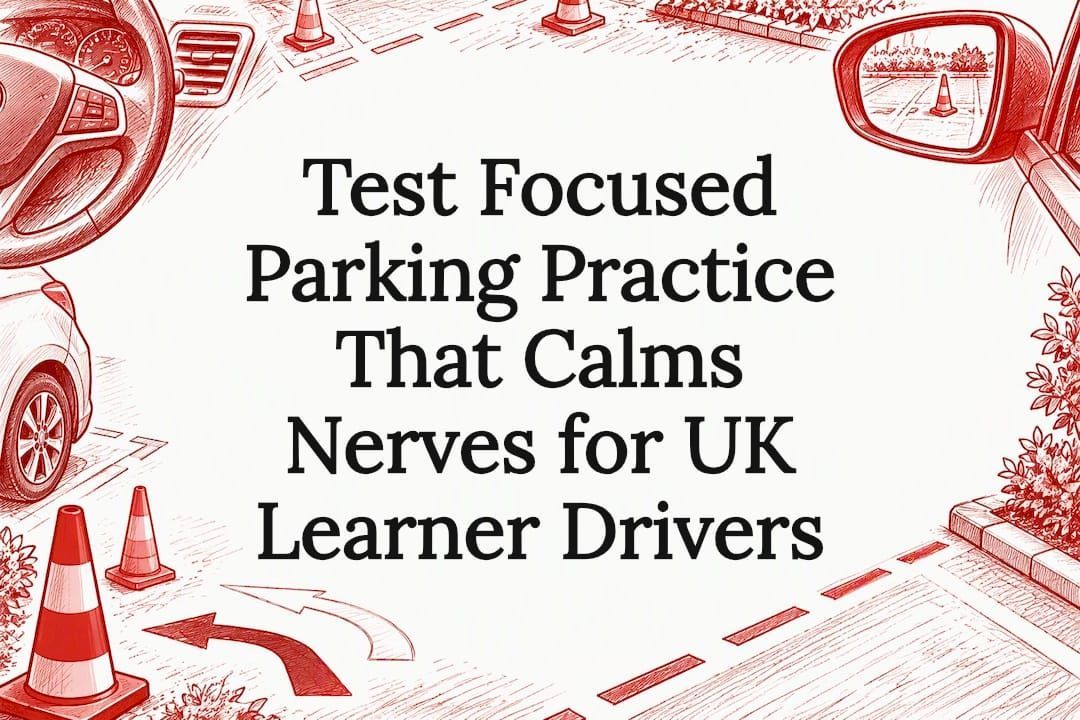
Your examiner will ask for one of three parking manoeuvres on test day: a parallel park, a bay park (forward or reverse), or pulling up on the right and reversing back. Passing comes down to steady vehicle control, constant all-round observation, and finishing in a safe, sensible position rather than a perfect one. The habit that ties it all together is simple: mirrors, signal, manoeuvre, every single time.
Key Points:
- Relying solely on reversing cameras or sensors is insufficient, as examiners expect continuous physical observation and mirror checks throughout the manoeuvre.
- Practicing in increasingly busy environments helps build confidence, starting from empty car parks and progressing to test centers on quiet roads.
- Most parking faults stem from rushing or panicking rather than lack of skill, so slowing down and using reference points improves control and reduces errors.
- Finishing position is more important than precise centering, with safety and good observation taking priority over perfection in the final placement.
- Focused, repetitive practice sessions with an instructor greatly improve performance, especially for learners most anxious about parking manoeuvres.
Table of Contents
- What the examiner asks for and how it's assessed
- Step-by-step technique for each manoeuvre
- Common faults and how to fix them
- Where to practise and how to progress
- Using reversing aids without losing observation skills
- How Costello's Driving School teaches parking
- Instructor note on realistic expectations
- Booking focused parking practice with Costello's
- Sources
- FAQ
What the examiner asks for and how it's assessed
The practical driving test requires you to complete one of three set manoeuvres, chosen by the examiner on the day. You won't know which one in advance, so all three need equal attention in your lessons.
- Parallel park : pulling up alongside a parked car, then reversing into the space behind it.
- Bay park : either reversing into a marked bay or driving in and reversing out, depending on what the examiner asks.
- Pull up on the right and reverse : stopping on the right-hand side of the road, then reversing back roughly two car lengths before rejoining traffic.
Examiners aren't marking for textbook precision. According to Ready to Pass guidance, what matters is control, effective observation throughout, and a finishing position that's safe and reasonable rather than dead-centre in a bay. A slightly wide angle in a bay won't fail you; forgetting to check your mirrors will.
Step-by-step technique for each manoeuvre
Each manoeuvre rewards the same underlying skill: picking a reference point, moving slowly, and checking constantly. Here's how to break each one down into a repeatable sequence.
- Parallel park : pull up alongside the front car, leaving about a metre of space between you and the parked car, then reverse slowly while turning the wheel fully towards the kerb once your reference point (usually the other car's rear wheel or bumper) appears in your rear window. Straighten the wheel as the car angles in, then make a final correction so you finish parallel and close to the kerb without touching it.
- Bay park : approach at a shallow angle, pick a fixed point such as a line marking or the bay corner, and turn earlier than feels natural when reversing in. Check both door mirrors as the car straightens, and don't worry about being perfectly central. Being safely within the lines is enough.
- Pull up on the right and reverse : choose a stretch of road with good visibility, signal right, and pull up close to the kerb. Before reversing, check mirrors and blind spots again, since the road picture changes constantly, then reverse in a straight line for about two car lengths before signalling and rejoining traffic when it's clear.
- Control drills : in a manual car, practise smooth clutch control at biting point so the car creeps rather than lurches. In an automatic, get used to gentle brake and throttle pressure so speed stays consistent. Repeat each manoeuvre three to five times in a quiet space before attempting it against the clock.
Pro Tip: Practise each manoeuvre slowly first, then time yourself once you're confident. Speed follows accuracy, never the other way round.
Common faults and how to fix them
Most parking faults come from panic or rushing rather than a lack of skill. Slowing down and trusting your reference points solves the majority of these problems.
- Excessive repositioning : pulling forward and back more than once usually means the initial approach angle was wrong. Fix it by practising your starting position before you begin steering.
- Touching the kerb or pavement : often caused by turning the wheel too early. Wait for your reference point to line up before applying full lock.
- Weak all-round observation : skipping mirror or shoulder checks under pressure. Build a habit of glancing at mirrors every few seconds during the manoeuvre, not just at the start.
- Finishing outside the bay or too far from the kerb : usually a sign of stopping too soon. It's fine to pause mid-manoeuvre to check your position, as long as you keep moving with purpose afterwards.
A single, controlled stop to reassess is not a fault. Several uncontrolled corrections in a row usually is.
Where to practise and how to progress
Building confidence works best in stages, moving from low-pressure spaces towards realistic test conditions.
- Start in an empty, marked car park with wide bays and no traffic, focusing purely on steering timing and reference points.
- Move to a busier car park with real traffic and pedestrians once the basic movements feel automatic.
- Practise on quiet residential streets for the parallel park and pull-up-and-reverse exercises, choosing roads with good visibility and checking Driving Test Centres: Waiting Times and Pass Rates | Early Car Test for suitable locations.
- Finish with a simulated test attempt: one manoeuvre, timed, with your instructor giving feedback afterwards rather than during.
Before any session, check mirrors and surroundings for pedestrians, cyclists and other vehicles, and never practise somewhere that could obstruct traffic or driveways. A quick site check takes seconds and avoids an awkward situation later.
Using reversing aids without losing observation skills
Reversing cameras and parking sensors are common in modern cars, but RoSPA's guidance is clear that they support observation rather than replace it. Relying on a screen instead of your mirrors and shoulder checks is one of the quickest ways to miss something a camera can't see, such as a cyclist approaching from an angle.
- Check mirrors first, then glance over your shoulder for blind spots.
- Use any camera or sensor reading as a final check, not your primary source of information.
- Lower a window if visibility is poor, since sound can alert you to hazards a screen won't show.
RoSPA notes that reversing cameras and sensors are useful aids but should never substitute for physical, all-round observation , a distinction examiners test for directly.
How Costello's Driving School teaches parking
At Costello's Driving School, parking manoeuvres are taught through personalised lessons built around how each learner actually processes reference points and control, not a fixed script. Instructors are DVSA-approved and lessons run in modern dual-controlled vehicles, which gives nervous learners a safety net while they build confidence with steering and clutch control.
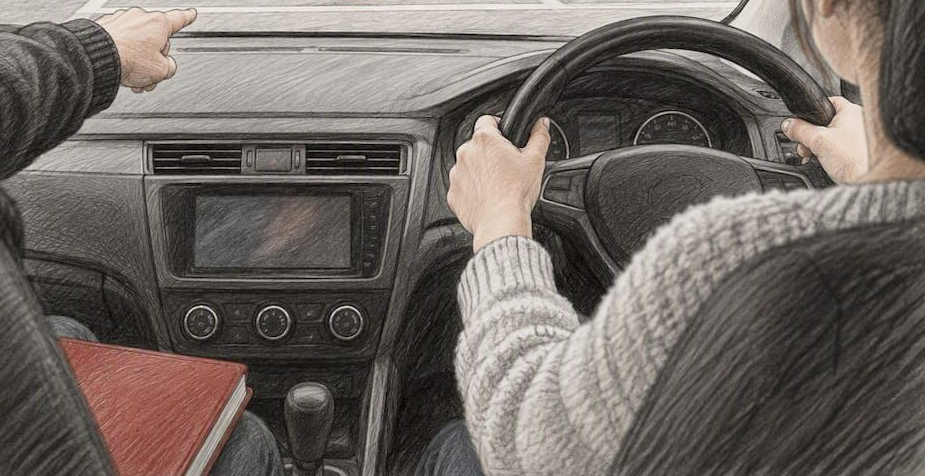
Lessons are available as standalone manual or automatic sessions, refresher training for returning drivers, or as part of an intensive course for learners working to a deadline. For those wanting a structured, time-bound route to test day, the course combines focused manoeuvre practice with ongoing feedback. Flexible scheduling means practice fits around work or study rather than the other way round.
Instructor note on realistic expectations
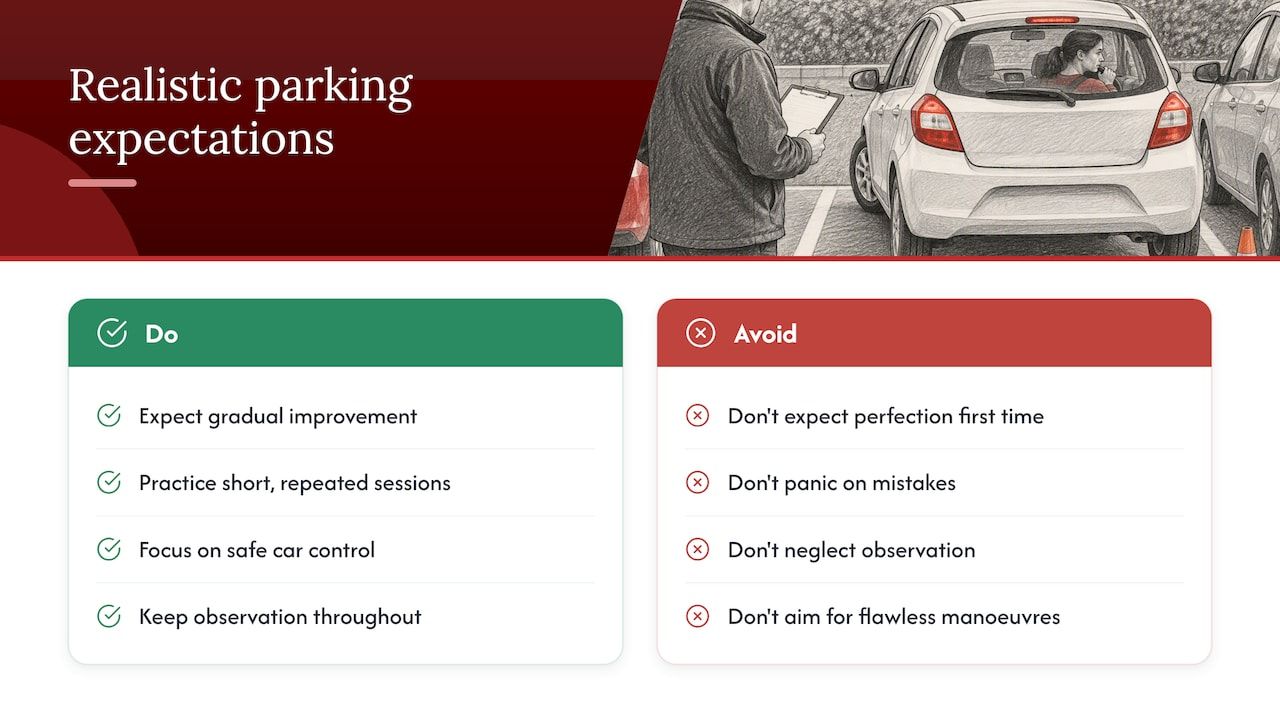
Parking manoeuvres rarely click on the first attempt, and that's normal rather than a sign of struggle. Small, repeated practice sessions build the muscle memory that panic erodes on test day.
What examiners want isn't a flawless manoeuvre. It's a car handled safely, positioned sensibly, with observation kept up throughout. That's a realistic, achievable standard for any learner willing to put in the repetitions.
— Dean
Booking focused parking practice with Costello's
If parking manoeuvres are the part of your test that worries you most, a few focused sessions often make more difference than general lessons alone. A typical session means dual-controlled car, direct instructor feedback after each attempt, and drills tailored to whichever manoeuvre needs the most work.
- Book manual or automatic lessons to practise manoeuvres alongside general driving skills.
- Consider the Guaranteed Pass course for a structured, intensive route to test readiness.
- Try refresher training if you're returning to drive after a break and want to rebuild confidence with parking specifically.
Get in touch to book a session that targets exactly what you need before test day.
Sources
For the official rules and further detail, see GOV.UK's test guidance, Ready to Pass manoeuvre pages, the Highway Code on reversing, and RoSPA's road safety advice.
FAQ
Which parking manoeuvres can the examiner ask for?
The examiner will ask for one of three manoeuvres: a parallel park at the side of the road, parking in a bay (either driving in and reversing out, or reversing in), or pulling up on the right and reversing back about two car lengths, as set out in GOV.UK's test guidance. You won't be told in advance which one, so all three need practice.
What counts as a fail during a parking manoeuvre?
Common causes of a fail include poor all-round observation, touching the kerb or pavement, or finishing well outside a bay or away from the kerb. A single controlled pause to check your position is not a fault, but repeated, uncontrolled corrections usually are.
Do I need to park perfectly in the middle of the bay?
No. Examiners assess whether the car is left in a safe, reasonable position rather than perfectly centred, according to GOV.UK guidance for examiners. Being safely within the lines with good control matters more than exact positioning.
Can I use a reversing camera during my test?
You can, but it must support rather than replace your mirror and shoulder checks. RoSPA's guidance is clear that cameras and sensors are aids, and examiners still expect visible, active observation throughout the manoeuvre.
How can I practise parking manoeuvres before my test?
Start in a quiet, empty car park to build confidence with steering and reference points, then progress to busier car parks and quiet roads as your control improves. Costello's Driving School offers focused lessons and refresher training for learners who want concentrated practice on specific manoeuvres.