Become an ADI in the UK: DVSA Rules, Part 3 Prep and £603 Costs
Become an ADI in the UK: DVSA Rules, Part 3 Prep and £603 Costs
An Approved Driving Instructor (ADI) is a driver who has passed three DVSA qualifying tests and joined the official ADI register. That registration is not optional paperwork: in Great Britain, you must hold it before you can legally accept payment for car driving lessons. The rest of this guide covers the tests, the costs, and the renewal cycle that keeps an ADI on the road.
Key Points:
- Passing all three DVSA tests and registering costs around £603, with most candidates needing several months to prepare.
- A trainee licence allows practice teaching under supervision but does not replace full registration, and badge colour indicates status.
- Standards checks are mandatory every four years (this is dependant on Examiner availability) and should be treated with huge importance to maintain the required teaching standard.
- The two-year window after passing Part 1 is a strict deadline for completing Parts 2 and 3, failure to do so results in restarting the entire process.
- Honest disclosure of character and criminal history is crucial, as the 'fit and proper' status heavily influences registration approval.
Table of Contents
- What does an ADI do, and who regulates them?
- The three ADI qualifying tests: format, attempts and fees
- Trainee licences and PDIs: what they actually allow
- Registration, renewals and standards checks
- How much does it cost and how long does it take overall?
- Who is eligible, and what does 'fit and proper' actually mean?
- Costello's Driving School perspective: preparing candidates for the real test
- Ready to train as an ADI with Costello's Driving School?
- Sources
- FAQ
What does an ADI do, and who regulates them?
An ADI is trained to the national standard for car and light van driving instruction, set and policed by the Driver and Vehicle Standards Agency. The DVSA's Registrar decides who gets onto the register and who stays on it, checking both driving competence and personal conduct before granting the badge that lets someone teach for money.
Being on the register carries practical weight beyond the legal right to charge:
- You can display the official green ADI badge in your vehicle, which reassures learners they are paying for a qualified professional.
- You get listed on GOV.UK's public register, which anyone can check before booking lessons.
- You can use DVSA-recognised branding and terminology in your marketing without misrepresenting your status.
Without registration, none of that applies, no matter how skilled a driver someone is behind the wheel.
The three ADI qualifying tests: format, attempts and fees
Qualifying as an ADI means clearing three separate tests, each assessing a different skill. GOV.UK sets fixed fees and attempt limits for all three, and missing a deadline can send you back to square one.
- Part 1: theory and hazard perception. This covers driving theory, highway code knowledge, and hazard perception, similar in structure to the learner theory test but pitched at instructor level. You can sit this test as many times as you need, though each attempt costs £81.
- Part 2: driving ability. An examiner assesses your own driving to a much higher standard than the standard practical test. You get three attempts at £111 each before you must wait longer or restart the whole process.
- Part 3: instructional ability. This tests whether you can actually teach, not just drive well. It also comes with three attempts at £111 each.
Quick stat: Part 1 costs £81, Part 2 costs £111, and Part 3 costs £111. Once you pass Part 1, the clock starts on a strict two-year window to pass Parts 2 and 3, and running past that deadline means starting the whole qualification again from scratch.
Trainee licences and PDIs: what they actually allow
A trainee licence, often called a PDI arrangement in the trade, lets someone practise teaching for payment after passing Part 2 but before finishing Part 3. It exists because instructional skill is hard to build without real learners in the car, and GOV.UK sets out the training routes that make this possible.
It comes with real limits, though:
- A trainee licence holder must usually work under supervision arrangements set by their training provider, not independently.
- It is time-limited and does not replace full ADI registration if you plan to teach long term.
- Learners can check an instructor's actual status by badge colour: green means full registration, pink indicates trainee status under a licence.
If in doubt, ask to see the badge colour before booking. It tells you everything about where that instructor stands in the process.
Registration, renewals and standards checks
Passing Part 3 does not end the process. GOV.UK requires you to register within 12 months of that pass, paying the first ADI certificate fee of £300 to formally join the register.
From there, the obligations become cyclical:
- Registration runs for four years at a time, not indefinitely.
- Renewal requires a fresh enhanced DBS check and a further fee every four-year cycle.
- The DVSA carries out standards checks during that period, assessing whether your teaching still meets the required grade.
Pro Tip: Treat your standards check like a mini Part 3 rather than a formality. Instructors who keep running informal mock assessments with a colleague tend to walk into the real check with far less anxiety.
Falling below the required standard on a check does not automatically end your career, but repeated failures can mean losing the right to charge for lessons until you requalify.
How much does it cost and how long does it take overall?
Budgeting for ADI qualification means adding up three test fees plus the first registration cost: £81 for Part 1, £111 for Part 2, £111 for Part 3, and £300 for the first ADI certificate. That is £603 in fixed DVSA and registration fees before you spend a penny on training.
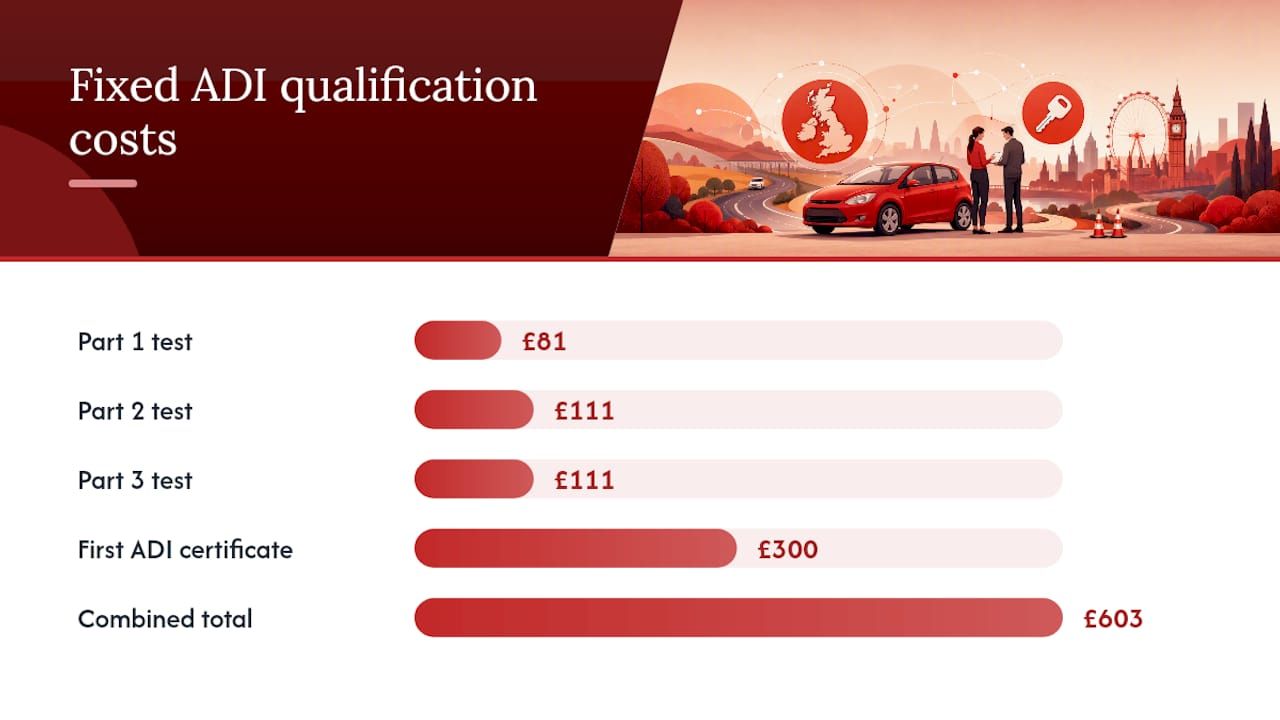
Key figure: Most candidates take several months of dedicated preparation to move from Part 1 to a full badge, constrained by that two-year window after passing Part 1.
Beyond the fixed fees, most people also pay for a structured training course, mock test sessions, and sometimes vehicle hire if their own car is not dual-controlled. DBS administration adds a small additional cost on top of the certificate fee. None of these extras are mandatory by law, but very few candidates pass Part 3 without some form of formal instructional training behind them.
Who is eligible, and what does 'fit and proper' actually mean?
Basic eligibility is straightforward: you need to hold a full GB or Northern Ireland driving licence and have held it for a set minimum period before applying. The harder bar is character, not driving skill.
- The DVSA Registrar must judge you 'fit and proper' to teach, which involves an enhanced DBS check covering both motoring and non-motoring history.
- Undisclosed convictions cause far more application problems than the convictions themselves; honesty on the form matters more than a clean record.
- GOV.UK's ADI register guidance sets out exactly what the Registrar considers, and it is worth reading before you apply rather than after a query comes back.
Disclose everything relevant upfront. Applications that try to gloss over a past issue tend to stall far longer than ones that address it plainly.
Costello's Driving School perspective: preparing candidates for the real test
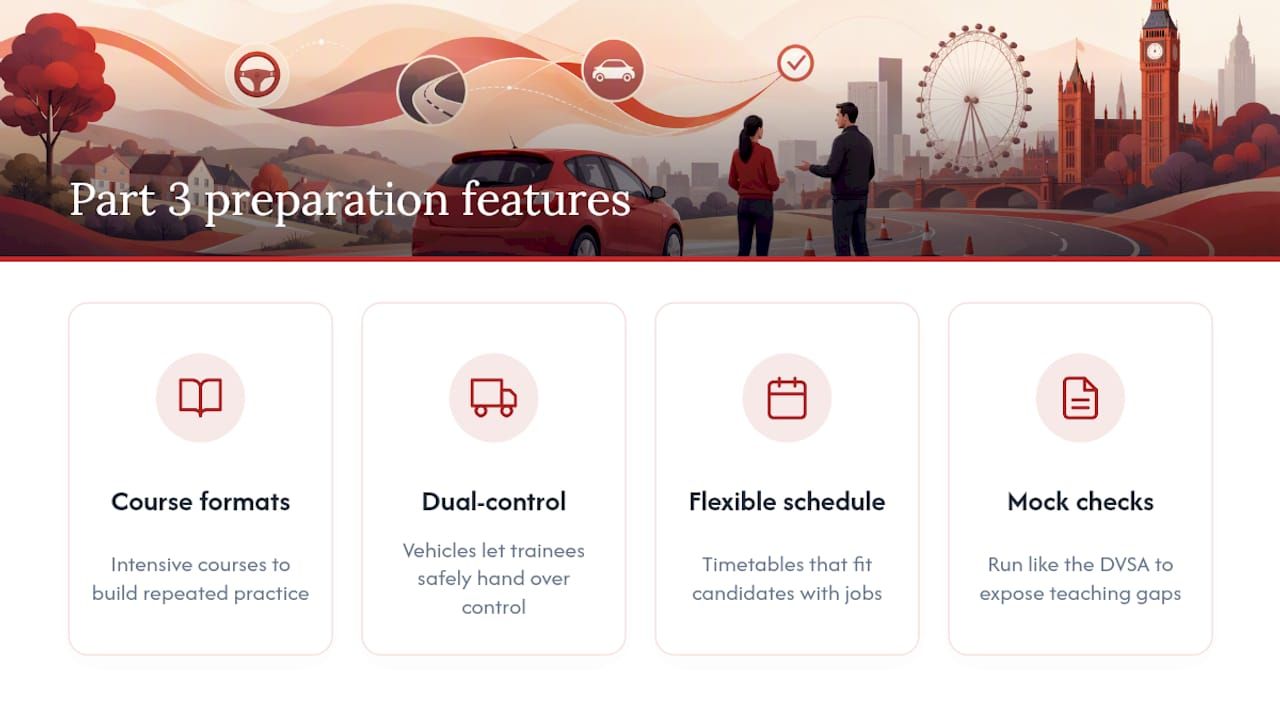
Part 3 is where most candidates come unstuck, not Part 2. Driving well is one skill; explaining a manoeuvre clearly to a nervous seventeen-year-old under time pressure is another, and it rewards repeated practice rather than last-minute cramming.
Instructor preparation is structured around that reality: intensive course formats, dual-controlled vehicles so trainees can safely hand over control, and flexible scheduling that fits around candidates who are training alongside existing jobs. Mock standards checks, run the way the DVSA actually runs them, tend to expose gaps in teaching technique that a straightforward driving lesson never would. More detail on structuring that specific preparation sits in this Part 3 training guide.
— Dean
Ready to train as an ADI with Costello's Driving School?
ADI training is built around the DVSA's actual Part 2 and Part 3 standards, not generic driving tuition dressed up as instructor prep. That means dual-controlled vehicles for safe practice handovers, structured mock standards checks, and scheduling flexible enough for candidates training around a job.
If you are weighing up whether to commit to the qualifying process, the practical next step is to look at what structured training actually covers before you book your Part 1. Explore the Become an Instructor course and see how the training maps onto each of the three tests, then get in touch to talk through a realistic timeline for your circumstances.
FAQ
How much does an ADI licence cost?
Total fixed costs come to £603: £81 for Part 1, £111 each for Parts 2 and 3, and £300 for the first ADI certificate on registration, according to GOV.UK.
How long does it take to qualify as an ADI?
Most candidates need several months of dedicated preparation across all three tests, but the hard legal limit is two years from passing Part 1 to completing Parts 2 and 3.
How long is an ADI disqualified for?
Disqualification periods depend on the reason, such as a standards check failure or a conduct issue, and the DVSA Registrar decides case by case rather than applying one fixed term.
How much does an ADI earn?
Earnings vary widely by location, hours worked, and lesson pricing, so there is no single official figure; Costello's Driving School's guide on realistic pass rates gives useful context on what qualified instructors can expect once working.
Recommended