PDI trainee licence: the complete guide for ADI part 2 passers
PDI trainee licence: the complete guide for ADI part 2 passers
You can apply for a PDI trainee licence once you have passed ADI part 2, have a valid DBS check, and can show a sponsoring ADI has agreed to give you at least 40 hours of instructor training (10 of those hours in a car). The licence costs £140 and runs for six months, giving you a fixed window to earn from lessons while you prepare for ADI part 3.
Before you apply, have these ready:
- Passed ADI part 2 certificate
- Valid DBS check (enhanced)
- ADI 21T instructor training declaration, signed by your sponsoring ADI
- ADI 3L application form, correctly signed by a manager or franchise owner where applicable
Then move fast but carefully:
- Confirm your 40 hours of training (with 10 hours in-car) are logged and signed off
- Choose your licence option (supervision or extra training) before you submit your application
- Pay the £140 fee through the DVSA's online service and send your declaration to padi@dvsa.gov.uk
Key Takeaways
Passing ADI part 2 opens the door to a six-month, £140 trainee licence, but success within that window depends on choosing the right option and logging every training hour from day one.
| Point | Details |
|---|---|
| Confirm eligibility first | You need ADI part 2 passed, a valid DBS check, and a sponsoring ADI before applying. |
| Choose your option carefully | Option 1 means supervision on 20% of lessons; Option 2 means 20 hours' extra training in 3 months, and you can't switch. |
| Get paperwork right first time | Missing signatures on ADI 3L or incomplete ADI 21T pages are the most common causes of delay. |
| Apply early for a second licence | Submit at least 10 working days before your current licence expires, with a dated covering letter. |
| Train, don't just teach | Costello's Driving School offers ADI part 3 tuition and mock assessments to help trainees pass first time. |
Table of Contents
- What are the eligibility rules and documents for a PDI trainee licence?
- What does a trainee licence allow you to do, and which option should you pick?
- How do you apply for a PDI trainee licence step by step?
- How should you use the six months to prepare for ADI part 3?
- Can you get a second trainee licence, and how do you apply?
- Ready to start ADI part 3 training with support that works?
- Sources
- FAQ
What are the eligibility rules and documents for a PDI trainee licence?
DVSA won't process a trainee licence application from someone who hasn't cleared the basics first. You need to have passed ADI part 2, and if you're still within the window from your ADI part 1 pass, that needs to be current too. On top of that, you must be what DVSA calls a "fit and proper person," backed by a valid enhanced DBS check that hasn't lapsed.
The paperwork side trips up more applicants than the eligibility side does. You'll need the ADI 21T instructor training declaration, confirming your sponsoring ADI has delivered at least 40 hours of training, with a minimum of 10 hours sat in a car with you. Alongside that sits the ADI 3L application form itself, plus proof of your DBS status and standard identity and driving licence details.
- ADI part 2 pass certificate
- Current DBS enhanced certificate
- ADI 21T signed by your sponsoring ADI
- ADI 3L fully completed, including any required manager signature
Pro Tip: Check the date on your DBS certificate before you submit anything. A certificate issued more than a few months ago can raise questions, and a missing manager signature on the ADI 3L is one of the most common reasons applications bounce back.
What does a trainee licence allow you to do, and which option should you pick?
A trainee licence lets you charge pupils to cover your costs while you train towards ADI part 3. It's not a shortcut around the qualification. It's a paid apprenticeship with strict conditions attached, and DVSA expects you to treat it that way.
You choose between two options when you apply, and the choice is permanent. Under Option 1, a qualified ADI must supervise at least 20% of your lessons, with each session logged on an ADI 21S form. Option 2 swaps ongoing supervision for a concentrated burst of extra training: 20 hours completed within three months, at least a quarter of it practical in-car work.
- Option 1: supervision on one in five lessons, recorded via ADI 21S
- Option 2: 20 hours' extra training inside 3 months, 25% minimum in-car
- No switching between options once submitted
Most trainees pick Option 2 because it feels less intrusive day to day, but fitting 20 hours of extra training around a diary full of paying pupils within a hard three-month window is tougher than it sounds.
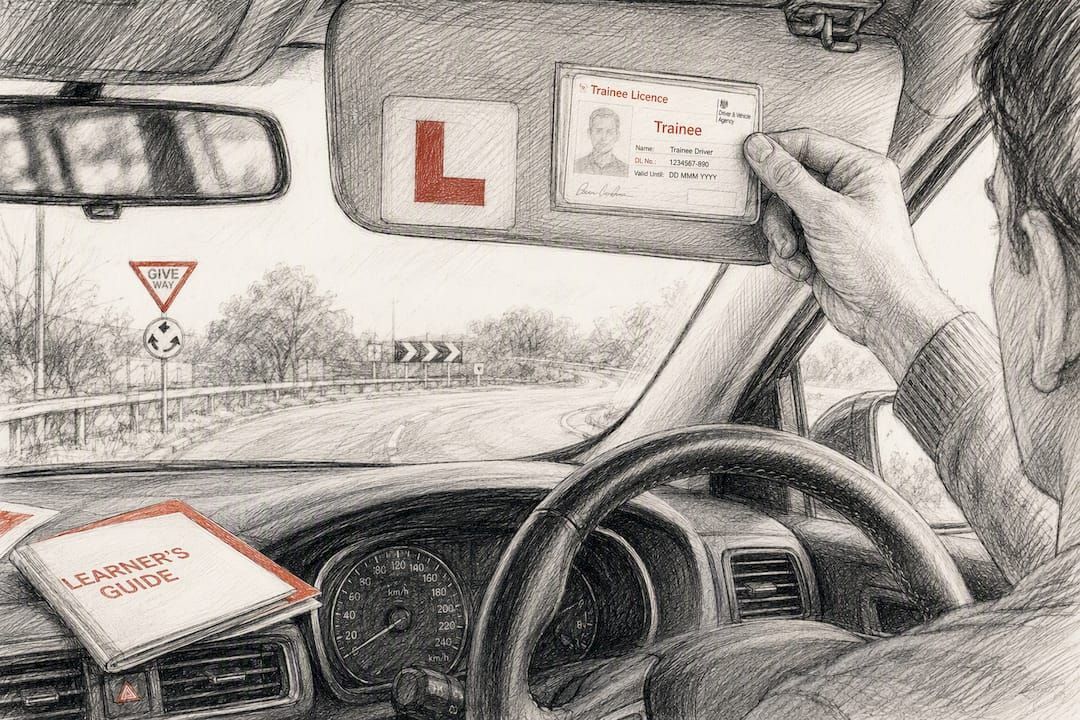
You must display your trainee licence in the vehicle during lessons and stick to the pupils and arrangements your licence permits. Fit-and-proper-person status isn't a one-off check either. Serious conduct issues during the licence period can lead to it being revoked outright.
Pro Tip: Keep a simple spreadsheet logging every lesson date, pupil, and supervision or training hour from day one. DVSA can ask to see this, and reconstructing six months of records from memory in week 23 is a miserable way to spend an evening.
How do you apply for a PDI trainee licence step by step?
The application itself isn't complicated, but the sequencing matters. Miss a step and you'll be stuck resubmitting while your clock ticks.
- Complete the ADI 3L application form in full, checking every required signature is present
- Gather your ADI 21T training declaration, signed by your sponsoring instructor
- Confirm your DBS certificate is current and matches the details on your application
- Pay the £140 fee through the DVSA's online application service
- Email your instructor training declaration to Gov if requested, alongside your online submission
Watch for these recurring errors:
- Missing manager or franchise owner signature on the ADI 3L form
- Incomplete ADI 21T pages, particularly the in-car hours section
- Sending documents to the wrong email address or skipping the online payment step entirely
If you're applying for a second licence rather than a first, timing shifts from helpful to critical. DVSA recommends submitting at least 10 working days before your current licence expires, giving processing enough breathing room to avoid a gap where you can't legally be paid for lessons.
How should you use the six months to prepare for ADI part 3?
Six months sounds generous until you're three months in and realise you've been so busy teaching that you haven't practised the skills part 3 actually examines. Treat the licence period as a training programme with paying pupils attached, not the other way round.
Build a rough curriculum for yourself: early weeks on core lesson structure and fault correction, middle weeks on progressively harder scenarios, and the final stretch on mock assessments that mirror what an ADI part 3 examiner looks for. Log every supervised or extra-training hour as you go, because those signed ADI 21S and ADI 21T pages double as both compliance evidence and a record of your own progress.
- Schedule structured lesson plans rather than improvising each session
- Ask your sponsoring ADI for observed teaching sessions with direct feedback
- Log all 10+ in-car hours before you rely on them for your application
- Keep dated notes showing how your teaching has changed over the six months
Costello's Driving School runs ADI part 3 training built around exactly this kind of structured preparation, including mock assessments and supervised teaching placements that mirror the real exam format.
Pro Tip: Run a mock ADI part 3 session every few weeks rather than one at the end. Dated evidence of steady improvement is far more persuasive, both to yourself and to any examiner, than a single good performance the week before your test.

Can you get a second trainee licence, and how do you apply?
DVSA doesn't hand out second trainee licences freely. The bar is genuinely high: they're issued mainly where something genuinely unavoidable stopped you using your first licence properly, such as a serious illness, bereavement, or a long-term injury. Simply running out of time to pass part 3, or having used the licence poorly, won't get you very far.
Apply while your current licence is still valid, ideally at least 10 working days before it expires, so there's no gap where you're unable to be paid for teaching.
- Submit before your existing licence expires, not after
- Include a covering letter explaining the circumstances and dates involved
- Attach supporting evidence (medical letters, dated records) wherever possible
- Note that continuation rights may apply while an appeal is pending, but delay works against you
Pro Tip: Write your covering letter as a timeline, not a plea. State the dates your circumstances changed, what you'd completed before that point, and what steps you've taken since. Specifics persuade; general explanations don't.
Why trainees should treat the licence as a formal training phase
Too many trainees see the six months as a licence to earn and squeeze part 3 preparation round the edges. That's backwards. The trainees who pass part 3 first time are usually the ones who ran their trainee period like a structured course, with observed sessions and mock assessments baked in from week one, not bolted on in month five. Lean on your sponsoring ADI, keep your paperwork clean, and hold yourself to the same professional standard DVSA expects. It pays off faster than winging it ever does.
Ready to start ADI part 3 training with support that works?
If you're weighing up whether to prepare for ADI part 3 alone or with structured tuition, the honest answer is that six months disappears fast once paying pupils fill your diary. Costello's Driving School runs dedicated instructor training across Essex and Suffolk, built specifically for trainees holding a PDI trainee licence who need to turn their supervised hours into a genuine part 3 pass.
- Structured ADI part 3 tuition with progressive lesson plans
- Mock assessments that mirror the real examiner format
- Support logging your training hours and supervision records
- Guidance completing ADI 3L and ADI 21T paperwork correctly
Get in touch with Costello's Driving School to book your first ADI part 3 training session and get your six-month window working for you instead of against you.
Sources
Check the DVSA trainee licence overview, download the ADI 21T form and ADI 3L form, and keep signed copies of both for your records.
FAQ
How much does a PDI trainee licence cost?
The PDI trainee licence costs £140 and is valid for six months from the date it's issued.
How do I get a PDI licence?
You apply after passing ADI part 2, using the ADI 3L form alongside your ADI 21T training declaration, a valid DBS check, and the £140 fee paid through the DVSA's online service.
How long does it take to become a PDI?
There's no fixed timeline before you're eligible, since it depends on how quickly you pass ADI parts 1 and 2, but once approved your trainee licence itself runs for six months.
How much does a PDI earn?
Earnings vary by hours worked, region, and pupil numbers, so figures aren't fixed; you can read more about realistic driving instructor earnings in the UK for context.
Recommended