Road Rage Avoidance: How to Stay Calm Behind the Wheel
Road Rage Avoidance: How to Stay Calm Behind the Wheel
The best way to avoid road rage is to stop it before it starts. Leave enough time, read other drivers' mistakes as mistakes rather than insults, and give an angry driver space instead of a reaction. These are skills, and like clutch control or mirror checks they improve with practice and good instruction. At Costello's Driving School, our relaxed, patient lessons across Essex and Suffolk are built around exactly that: helping learners feel in control on busy roads.
This guide is for learners, new drivers and anyone whose pulse rises in traffic. It covers why road rage happens, how to keep your own temper, how to handle an aggressive driver, and when to involve the police.
Key Takeaways
- "Road rage" is not a legal offence in itself. It is a catch-all term for abuse, threats, damage or violence that follows a driving incident, and the behaviour is dealt with under existing criminal law.
- Most road rage starts with how you interpret an incident, not with the incident itself. Changing the story you tell yourself is the quickest fix.
- Time pressure, congestion and heat make you more likely to snap, so leaving earlier is the simplest protection.
- If someone is tailgating or glaring at you, stay steady, let them pass and do not retaliate.
- If you fear for your safety, call 999. Report threats or violence to the police afterwards.
Table of Contents
- What road rage actually is
- What triggers it
- How to avoid becoming the angry driver
- How to deal with an aggressive driver
- Why learners and nervous drivers are not immune
- Worked example: the late-for-work commute
- Can anger be trained down?
- What we teach on lessons
- Perspective: calm is a skill you can learn
- Lessons that build calm drivers
- FAQ
- Sources
What road rage actually is
UK police explain that there is no specific offence of road rage. The phrase covers verbal abuse, threats, vehicle damage and physical violence, usually sparked by a driving incident. What the law does care about is your behaviour: Highway Code Rule 147 asks every driver to be careful of, and considerate towards, other road users.
It is also less common at its worst than the headlines suggest. A review of the research found that up to a third of people in community samples admit to having been a perpetrator at some point, but only around 2% of incidents or fewer end in serious damage to people or vehicles. The reassuring reading: most road rage is shouting, gesturing and tailgating, and most of it can be defused by the person who stays calm.
What triggers it
A 2021 academic review of road rage regulation found three common immediate triggers:
- Your progress is blocked , for example by a slow driver. This is the most common trigger.
- You are put at risk by someone driving recklessly.
- Another driver seems discourteous or hostile. This is the least frequent of the three but produces the most intense anger.
The same review lists background conditions that load the dice: warm temperatures, time urgency, work stress and traffic congestion. Look at that list and you can see a pattern. Most of it is about you and your day, not about the other driver. A rushed, hot, stressed driver in a queue is primed to react to the smallest thing.
The story you tell yourself
The review's central point is that anger depends on how you appraise a situation against your goals. Say a car overtakes you, then you end up stuck behind it at the next lights. If you decide it was deliberately done to slow you down, and you are already late, rage follows. The review links rumination (replaying the incident) and "hostile anticipation" (expecting other drivers to mean you harm) with higher road rage.
The practical consequence: the earlier you challenge the thought, the easier it is. Research by the AA, summarised in a 1997 paper on aggressive driving, stresses stepping in early in the anger cycle. At high levels of rage people struggle to think rationally and tend to dismiss anything that would excuse the other driver. Prevention beats cooling down.
How to avoid becoming the angry driver
Build in slack before you set off
Time pressure is one of the biggest background triggers, so the most effective habit is also the dullest: leave ten minutes earlier than you think you need. Check your route, fuel and the weather before you move. If you are exhausted, upset or furious about something else, the Highway Code's advice under Rule 147 is to pull over, calm down and continue when you feel relaxed.
Reframe the other driver
When someone cuts in, pulls out late or hovers on your bumper, try one of these thoughts:
- "They have made a mistake, as I have." Rule 147 itself says to be patient and remember that anyone can make a mistake.
- "They might be lost, distracted or new."
- "I will never see them again."
These are not about being nice. They take away the sense of being personally targeted, which is what turns annoyance into fury.
Do not rehearse the incident
Rumination keeps anger alive. If you notice yourself replaying an event, change what you are doing: a few slow breaths, a lower shoulders check, a change of radio station. Do not chase the other car. Counter-aggression is not harmless: the AA paper notes that even low-level aggression such as swearing and gesturing is often futile and raises the risk of retaliation.
Treat tailgating as a car-control problem
Being tailgated feels personal, but National Highways says it is often unintentional. Its advice is to:
- drive normally and hold a steady speed so the driver can overtake;
- signal early and keep left where it is safe;
- avoid speeding up, deliberately slowing down or tapping your brake lights, which can provoke road rage and create a more dangerous situation;
- avoid staring into the rear-view mirror.
It also reminds drivers to leave at least a two-second gap on faster roads, which keeps you from being the one who tailgates in the first place.
Small habits that keep temperatures down
- Signal clearly and in good time, so others are not surprised.
- Let people merge. A one-second delay costs you almost nothing.
- Use your horn only to warn of danger, not to express opinion.
- If you make a mistake, raise a hand in apology. Road Safety Scotland recommends this, and it often defuses a situation immediately.
- Keep the cabin cool and comfortable. Heat is a known background trigger.
How to deal with an aggressive driver
Sometimes the other person is the problem, whatever you do. The aim is simple: get away safely, without escalating.
- Do not engage. Avoid eye contact and do not gesture back. Road Safety Scotland's guidance says to avoid eye contact with aggressive drivers.
- Give them room. Let them pass. If you can, move to another lane or take a different turn instead of racing them.
- Lock the doors and keep the windows up.
- Leave space around your car so you can move away without speeding or driving dangerously, particularly at junctions and queues.
- If a driver gets out and approaches and you cannot safely drive off, the same guidance says to flash your lights and sound your horn to draw attention.
- Do not drive home. If you think you are being followed, head for a busy, well-lit public place rather than your own address, and call 999 if you feel unsafe.
When to call the police
The police advise reporting a genuine threat of violence, or being pushed, punched or kicked, to your local force. If the incident is happening now and you fear for your safety, call 999. Abuse aimed at your race, religion, sexual orientation, disability or gender should also be reported.
For dangerous driving that is not an emergency, forces generally accept reports on 101 or through online portals. Some run schemes for submitting dashcam or helmet-camera footage. Dorset Police's Operation SNAP FAQ says that where there has been serious physical or verbal violence after a driving incident, you should report it to the police directly rather than through the footage scheme, because more serious offences may have been committed. Whatever you record, never handle a phone while driving. A legal guide to reporting dangerous driving notes this could expose you to prosecution, and also that many forces expect footage within a short window, often 7 to 14 days.
Why learners and nervous drivers are not immune
Teenagers and new drivers are often on the receiving end: queued behind, hooted at, overtaken tightly. Nervous drivers sometimes worry that every impatient driver is judging them. Remember that being new does not make you the problem. Driving at a safe speed, keeping a proper gap and signalling early are what a good driver does.
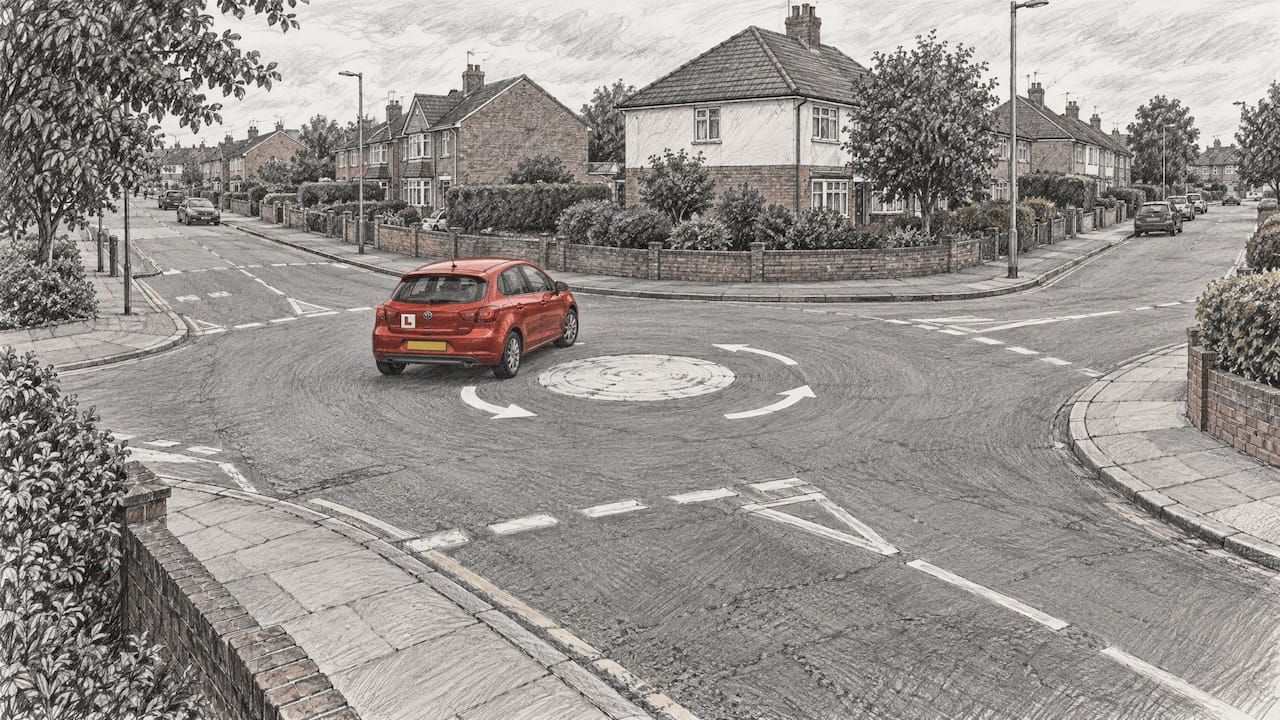
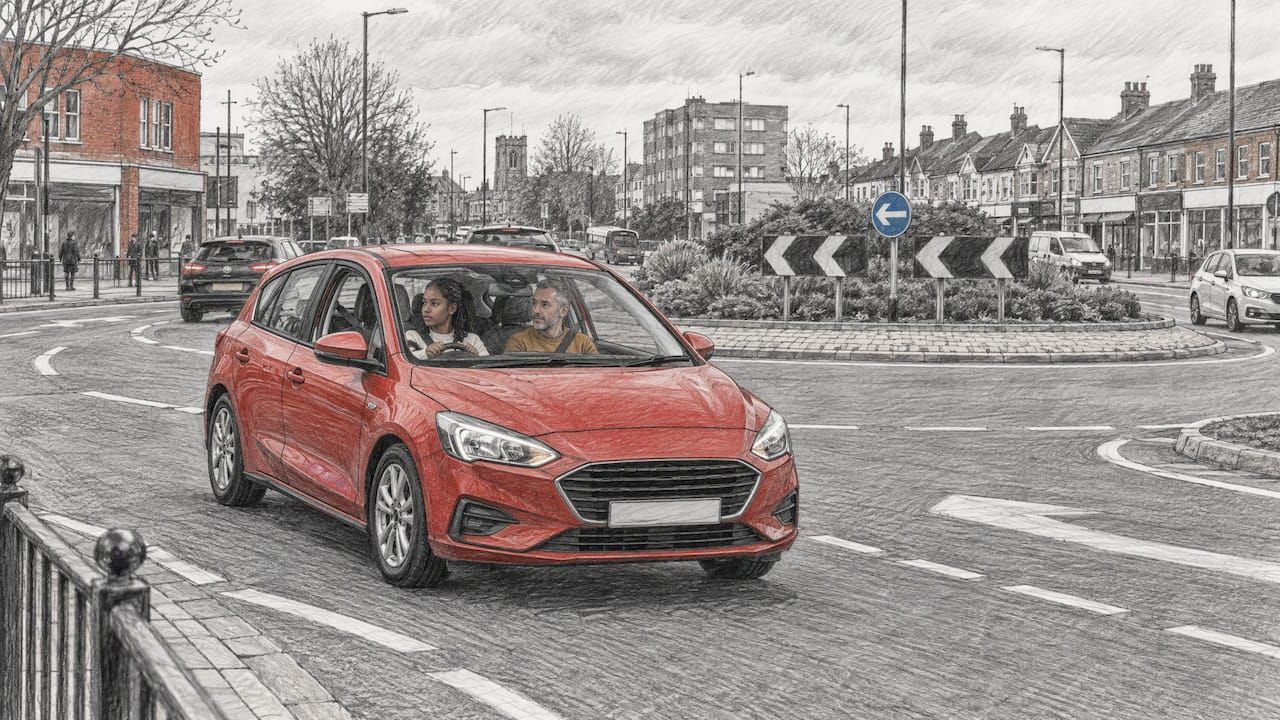
The same review of triggers explains why this matters. If you already feel tense, you are more likely to read a tailgater or a horn as hostility. The more practised you are in handling busy junctions, roundabouts and dual carriageways, the less these moments feel like threats, and the less you react to them.
Worked example: the late-for-work commute
You are leaving Colchester for Chelmsford and you have a 9am start. You set off at 8.20, but the A12 is slow. A van overtakes, then brakes sharply in front of you.
- The rage route: you decide he did it deliberately, you speed up, tailgate him and trade gestures. You arrive flustered, with a heart rate to match and a real risk of a collision.
- The calm route: you ease off, restore a two-second gap, and tell yourself he probably misjudged the queue. You arrive at 9.05, with an apology ready. Five minutes late is a minor problem. A collision or a confrontation is a major one.
The difference is not temperament. It is leaving earlier, reading the incident differently and refusing to compete.
Can anger be trained down?
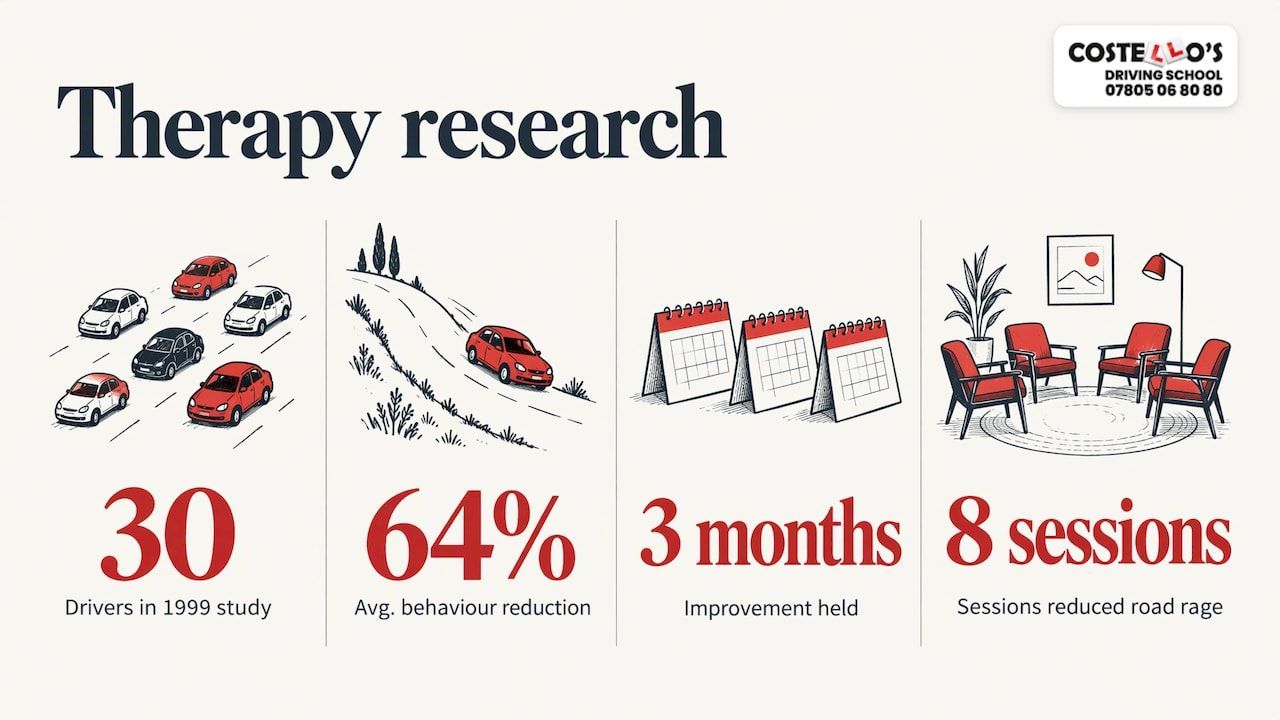
Yes. The American Psychological Association reports on therapy for aggressive drivers in a 1999 New York study of 30 drivers. Treatment combined deep relaxation, stress-management skills and a technique called cognitive restructuring, which means questioning the thoughts that fuel anger. The group averaged a 64% drop in aggressive driving behaviours, and the improvement held at a three-month follow-up. Separate studies by Deffenbacher found that eight sessions of relaxation-based or combined therapy reduced both the frequency and intensity of road rage among high-anger drivers.
You do not need a clinical programme for everyday irritation, but the principles are the same: relax your body, question your assumptions and practise. If anger behind the wheel is frightening you or others, or it is part of a wider problem with anger or stress, talk to your GP.
What we teach on lessons
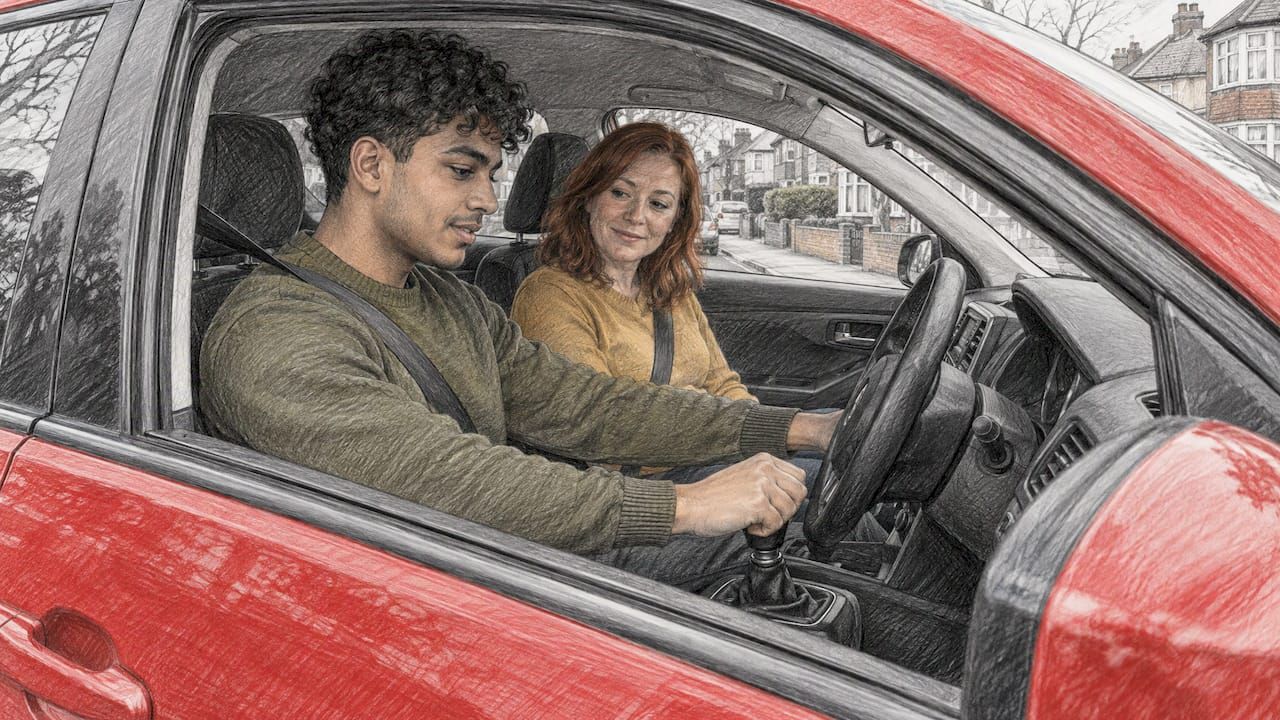
At Costello's we do not treat calm as a bonus. Our instructors are friendly, DVSA-approved and patient, and we specialise in helping nervous learners build confidence. Lessons are tailored to the individual, in modern dual-controlled cars, so you can practise tricky situations such as a close follower, a late merge or a busy roundabout in a setting where you know help is at hand.
On a typical lesson, that means practical habits:
- holding a steady speed and a safe gap when someone is close behind;
- planning ahead so you are not rushed into mistakes;
- reading other drivers' intentions rather than assuming the worst;
- staying composed when a junction does not go as planned.
We offer both manual and automatic lessons, evening and weekend times for busy people, and refresher and confidence-building lessons for qualified drivers who have lost their nerve.
Perspective: calm is a skill you can learn
Learners often tell us they are not scared of the car. They are scared of the other drivers: the horn behind them, the van too close, the feeling of being watched.
Our view is that confidence on the road comes from practice in a calm setting, with an instructor who is patient and a car with dual controls, so that nothing feels out of your hands. When you have rehearsed a situation, it stops feeling like an attack. You see a driver in a hurry, and you let them go.
That is why we tailor each lesson to the person in the seat. A nervous teenager, a busy parent fitting lessons in on a Saturday and a returning driver who has lost their nerve all need different things. The goal is the same: a driver who stays composed, keeps a safe gap and gets home without a story to tell.
Dean
Lessons that build calm drivers
If you want to feel steadier in traffic, whether you are a learner or have had your licence for years, a few hours with a patient instructor can make a real difference. Our manual lessons cost £37 to £38 per hour and automatic lessons cost £42 per hour. Our refresher and confidence-building lessons are for drivers who want to feel settled again, and our Guaranteed Pass course is £2,200 as a one-off for learners who want a structured route to passing.
See lessons and prices at Costello's Driving School, or read about our Guaranteed Pass course. We teach across Essex and Suffolk, including Colchester, Chelmsford, Ipswich and Romford.
FAQ
How do I avoid road rage?
Leave earlier than you need to, so time pressure does not build. Treat other drivers' mistakes as ordinary errors, and do not respond to gestures, horns or tailgating. If you feel your anger rising, pull over somewhere safe and calm down before continuing.
What should I do if an aggressive driver confronts me?
Avoid eye contact, keep your doors locked and windows up, and leave space to pull away safely. If someone gets out of their car and approaches, flash your lights and sound your horn if you cannot drive off. If you fear for your safety, call 999.
Is road rage a criminal offence?
There is no offence called road rage. The behaviour it describes, such as threats, damage or violence, is covered by existing criminal law, and dangerous driving is an offence under the Road Traffic Act 1988. Report threats or assaults to the police.
What should I do if someone is tailgating me?
Don't brake suddenly or speed up. Keep a steady speed, signal early and move left when safe so they can overtake. National Highways says tailgating is often unintentional, and that reacting to it can make things worse.
Sources
- Q383: I have been the victim of road rage, what will the police do? (Ask the Police)
- Regulating Road Rage (PMC, 2021)
- Road Rage: What's Driving It? (PMC, 2010)
- Aggressive Driving: 3 Studies (1997)
- Tailgating and how to avoid it (National Highways)
- Highway Code Rule 147
- Safe driving (Road Safety Scotland)
- Operation SNAP FAQ (Dorset Police)
- How to Report Dangerous Driving in the UK (Lawble, 2026)
- The fast and the furious (American Psychological Association)