Beat UK Driving Test Waits Using DVSA Centre Medians and 2026 Booking Rules
Beat UK Driving Test Waits Using DVSA Centre Medians and 2026 Booking Rules
Half of all learners who sat their test in July 2026 waited no more than 11.1 weeks ( https://www.gov.uk/guidance/driving-test-appointments-release-dates-and-finding-earlier-tests), but that national median hides big local swings, with some centres running far shorter queues and others considerably longer. New standard appointments release 24 weeks ahead, every Monday at 6am, while cancellation slots can appear at any hour. Check the DVSA centre-level data for your test centre before booking, and set your expectations by that figure rather than the national headline.
Key Points:
- Your local driving test center's median wait time can differ by several weeks from the national average of 11.1 weeks, so check centre-specific data before booking.
- Cancellation slots appear randomly at any time, requiring daily monitoring and flexibility in location and test time to increase chances of securing an earlier appointment.
- Booking rules restrict learners to only two modifications per test and limit test moves to the three closest centres, emphasizing the need for careful initial planning.
- The number of tests conducted at a centre and its median wait time should be evaluated together, as low test volume can produce misleadingly short waits.
- Arriving with the correct documents and vehicle checks, and avoiding unofficial booking services, are essential steps to prevent day-of cancellations or refusals.
Table of Contents
- The national picture: median vs availability and why centre-level figures matter
- How appointments are released and how cancellation slots work
- How to read and use the DVSA centre-level waiting-time data
- 2026 booking-rule changes you must know
- Practical tactics to find an earlier test, and what to avoid
- Test-day admin and vehicle checks that stop cancellations at the centre
- Timeline planning: how long to expect to wait and scheduling lessons around it
- From our instructors: practitioner tips for planning and avoiding delays
- Why the "wait time panic" misses the point
- Ready sooner with the right lesson plan
- Sources
- FAQ
The national picture: median vs availability and why centre-level figures matter
The 11.1 week median is a national average pulled from every test centre in the country. Your actual wait depends entirely on which centre you use, and the gap between the best and worst performing centres is often measured in months, not weeks.
DVSA changed how it reports this data because the old system was misleading learners. For years, the headline figure was an "availability" percentage, essentially the proportion of appointments open within a set number of weeks. That number told you almost nothing useful if you didn't know which centres were dragging the national average down. DVSA's own details on the change gives examples of centres where the median wait sits well below the worst national figures quoted in the press, precisely because those headline numbers blend together centres that are nowhere near each other geographically or in demand.
Median waiting time , in DVSA's usage, means the middle value when every test booked at a centre in a given month is lined up by how long the candidate waited. Half waited less than that figure, half waited more. It filters out the extreme outliers that skew an average, which is why it's a more honest planning tool than a raw availability percentage.
A few things worth remembering when you look at this data:
- The median can shift month to month as instructors and learners book, cancel, or move tests.
- A short median at a rural centre often reflects lower demand, not faster processing.
- Comparing your local centre to a neighbouring one 20 minutes away can reveal a meaningfully shorter wait.
Key figure: Half of July 2026's test candidates nationally waited 11.1 weeks or less, but your own centre's median could sit several weeks either side of that.
How appointments are released and how cancellation slots work
DVSA runs two separate streams of availability, and understanding both changes how you plan your booking.
- Standard 24 week release. Every Monday at 6am, DVSA opens a fresh batch of appointments exactly 24 weeks into the future. If you're watching for these, you need to be logged in and ready at 6am sharp, because the booking service queue is busiest at that exact moment. Joining the queue on a Monday morning only helps if a slot roughly six months out actually suits you.
- Cancellation appointments. These appear when another learner cancels, reschedules, or fails to complete a booking. They can surface at any time, day or night, seven days a week, and there's no pattern to exploit. DVSA is explicit that there's no reliable "best time" to hunt for these, because they're generated by other people's decisions, not by any DVSA schedule.
- No waiting list. This trips up a lot of learners. There's no queue you can join and simply wait your turn for a cancellation. You either check the booking service yourself, ask your instructor to check on your behalf, or use the official cancellation checker built into the GOV.UK service.
The practical upshot: if you want a test soon, don't fixate on the Monday release. Set aside a few minutes each day, or ask your instructor to keep an eye on it, and treat any early slot that fits your readiness as a genuine stroke of luck.
How to read and use the DVSA centre-level waiting-time data
DVSA publishes two datasets that matter here: DRT121G and DRT122F , both part of the driving test and theory test statistics for cars. They're updated monthly, so the figures you're looking at reflect the previous month's actual bookings rather than a live snapshot.
When you open these tables, focus on a handful of columns:
- Median waiting time for that specific centre, in weeks.
- Test volumes , showing how many tests were conducted at that centre in the month.
- Pass rate , which tells you something about the mix of learner readiness at that centre but not necessarily how easy the routes are.
Comparing centres side by side is the single most useful thing you can do with this data. If your nearest centre has a nine week median but one 15 minutes further away sits at five weeks, that's worth knowing before you book. Our guide on choosing the right test centre by pass rate goes into more detail on weighing pass rate against distance and wait time.
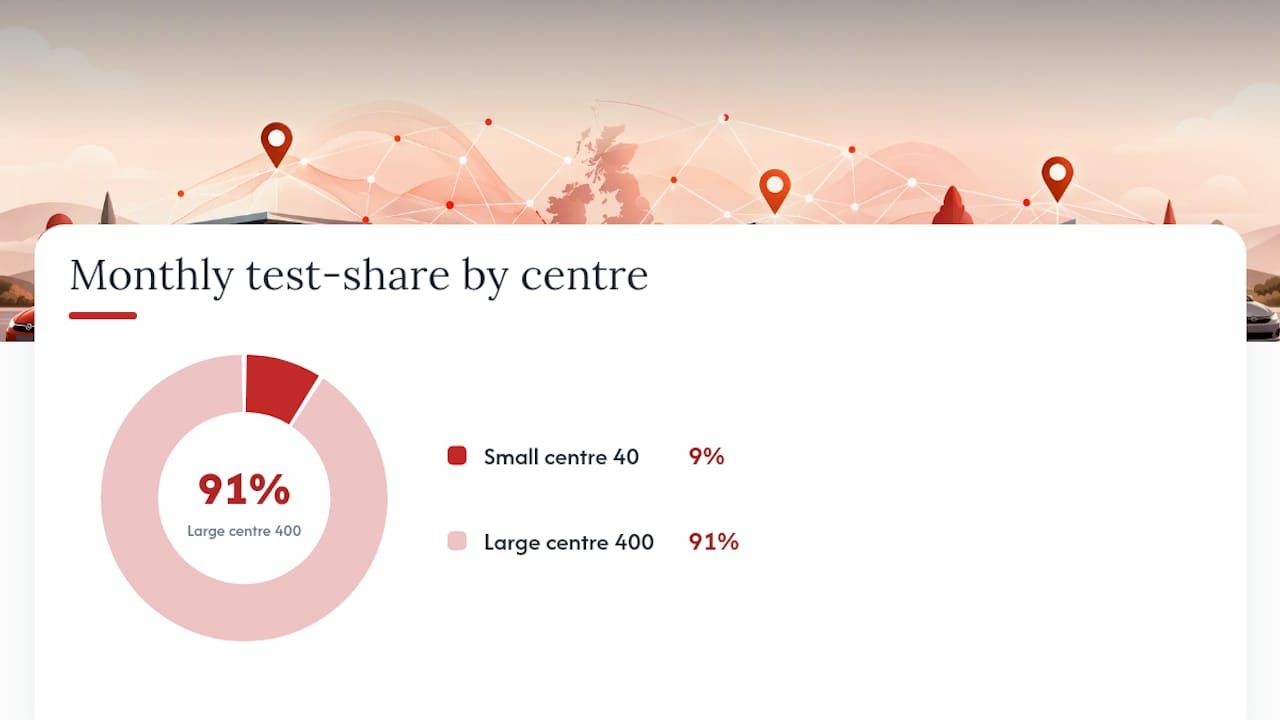
Pro Tip: Watch the test volume column before trusting a short median. A centre that ran only 40 tests in a month can show a misleadingly low or high median purely because the sample is small. A centre running 400 tests a month gives you a far more stable number to plan around.
2026 booking-rule changes you must know
DVSA tightened its booking rules in 2026, and if you're relying on an instructor or a family member to manage your test, you need to know what changed.
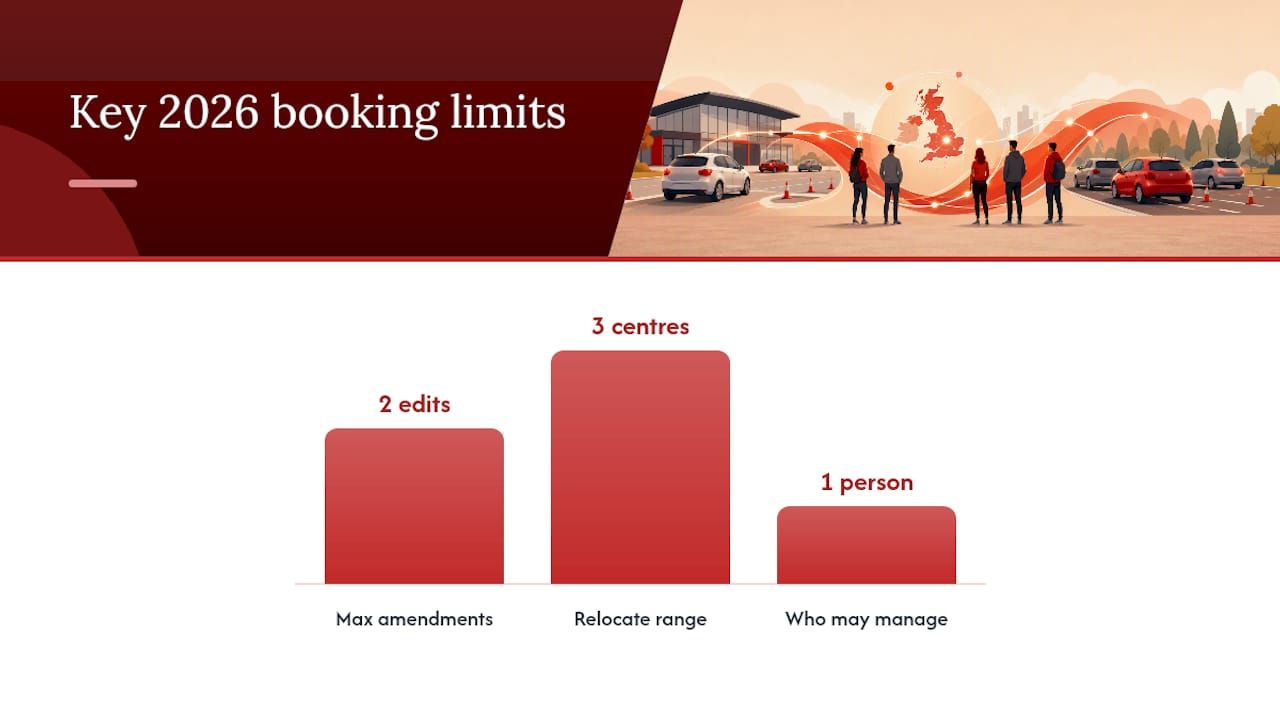
- Two changes only. You can now amend a car test booking a maximum of two times. After that, the booking is locked, so use your changes carefully rather than shuffling dates on a whim.
- Only the learner can book or manage the test. Instructors, parents, or third-party services can no longer create or amend a booking on a learner's behalf using their own account details in the way some previously did.
- Moves are restricted to the three nearest centres. If you need to relocate your test, you can only move it to one of the three centres geographically closest to your original choice.
These rule changes exist because DVSA identified widespread slot hoarding, where bulk bookings and resale-style behaviour by unofficial services were locking up appointments that genuine learners couldn't access. The insight behind the policy is straightforwardly about fairness: DVSA wants the booking system reflecting real demand, not automated hoarding.
In practice, this means you should book using your own details from the outset, keep your instructor's personal reference number (PRN) to hand when your instructor helps you select a sensible date, and make sure your provisional licence details are current before you start. A booking rejected over mismatched licence details wastes one of your two permitted changes.
Practical tactics to find an earlier test, and what to avoid
There's no shortcut that beats patience and readiness, but a few habits genuinely improve your odds of landing an earlier slot.
- Check the booking service yourself, regularly. A few minutes each morning and evening catches more cancellations than sporadic checking once a week.
- Stay flexible on centre and time. If you're willing to travel to one of your three permitted alternative centres, or take an early morning or late afternoon slot, you widen your chances considerably.
- Keep your instructor in the loop. Many instructors check availability as part of their routine and can flag a good slot the moment it appears.
What you should absolutely avoid: unofficial cancellation finder apps and bot services that scrape the booking system automatically. DVSA's Ready to Pass campaign is explicit that these tools breach the booking service's terms of use, and DVSA has cancelled tests booked through unofficial channels, leaving the learner both without a slot and out of pocket. Some of these services also collect payment for something that's free through the official channel.
Pro Tip: If you're not ready for the date you're holding, move it rather than sit the test anyway. A fail costs you the fee and pushes your next booking weeks further back. Moving it early, within your two permitted changes, is almost always the smarter call.
Test-day admin and vehicle checks that stop cancellations at the centre
A surprising number of tests are cancelled or refused before the car even leaves the car park, and the fee is forfeited when that happens.
You must bring your photocard provisional driving licence to the test centre. If you turn up without it, the examiner will cancel the test on the spot and you lose your fee, no exceptions. If you hold an older paper licence, you'll need a valid passport alongside it.
On the vehicle side, check these before you leave home:
- Tyres meet the legal tread depth and show no visible damage.
- All lights and indicators work, including brake lights.
- No warning lights are showing on the dashboard.
- L-plates are displayed correctly front and back.
- Insurance documentation covers the test, if you're using your own car rather than an instructor's dual-controlled vehicle.
Key figure: A missing photocard licence is one of the most common and entirely avoidable causes of an instant, fee-forfeiting cancellation on test day.
Arrive at least ten minutes early, run through this checklist the night before, and glance over it again on the morning of the test. It takes five minutes and saves you weeks.
Timeline planning: how long to expect to wait and scheduling lessons around it
Use the national median as a rough starting point, but plan your actual lesson schedule around your chosen centre's own figure from the DVSA dataset. If your local centre's median sits at eight weeks, that's the number that should shape your lesson block, not the 11.1 week national average.
- Book your test once you can see a realistic date, then structure lessons backwards from it. Learners often benefit from an intensive block of lessons in the fortnight before the test, tightening up any habits that have slipped.
- Schedule a mock test one to two weeks before the real one. A mock run at a centre matching your real test conditions builds familiarity with the route style and reduces nerves. Our guide to booking the right mock test covers how to time this well.
- If you need to move your test, remember you have two changes available under the 2026 rules, and moves are restricted to your three nearest centres. Rebooking too close to your original date risks landing back at a similar wait, so build in a buffer rather than moving at the last minute.
From our instructors: practitioner tips for planning and avoiding delays
Instructors often check the DVSA centre-level datasets regularly when advising learners on which test centre to target, weighing median wait against test volume so a "short" figure isn't just a small sample fluke. For a learner ready within a few weeks, that often means recommending a centre slightly further away with a genuinely shorter, more stable median.
On lesson planning, we typically recommend an intensive block in the run up to test day, followed by a mock test scheduled to mirror the real thing as closely as possible, right down to timing and route familiarity. Learners who need adjusted pacing, including those with ADHD, benefit from this structure even more, since a predictable run of lessons and a realistic mock reduces the anxiety that often causes avoidable mistakes on the day.
Why the "wait time panic" misses the point
Most of the anxiety around driving test waits comes from treating the national headline figure as personal fact. It isn't. The 11.1 week median tells you almost nothing about the wait at your specific centre, and learners who fixate on national backlog stories often end up either panicking unnecessarily or booking a test before they're genuinely ready, just to beat a queue that may not even apply to them.
The conventional advice, keep refreshing the booking page and hope, undersells how much control you actually have. Centre choice, within the three-nearest-centre rule, is a lever most learners never pull. So is timing your lesson block to match a realistic date rather than an aspirational one.
If there's one thing worth prioritising above all else, it's this: check your specific centre's DVSA data before you do anything else. Everything else, cancellation checking, lesson scheduling, mock test timing, should be built around that one number, not around a national statistic that was never about you in the first place.
— Dean
Ready sooner with the right lesson plan
A practical route through the waiting-time squeeze involves flexible lesson scheduling that fits around whatever test date you actually secure, mock tests run to mirror real conditions at local centres, and instructors who check DVSA centre data as a matter of routine before recommending where and when to book.
If you're staring down a longer wait than you'd like, an intensive block of driving lessons can get you test-ready fast, so you're not wasting a hard-won slot on a test you weren't quite prepared for. Learners who want the highest possible certainty around their test date should look at the Guaranteed Pass course, which structures lessons specifically around passing first time. This is one practical option for closing the gap between booking and being genuinely ready. Get in touch to talk through your test centre, your target date, and the lesson block that fits both.
FAQ
How long is the driving test waiting list in 2026?
There's no waiting list as such. The national median wait was 11.1 weeks for tests taken in July 2026, but your specific centre's median may be shorter or longer.
How quickly can I get a driving test in the UK?
It depends on your local centre and whether you're willing to check for cancellations regularly; some learners get a test within a few weeks by monitoring the booking service and staying flexible on timing and location.
How long do I need to wait between driving tests in the UK?
If you fail a test, you must wait ten working days before retaking it, and you'll then face the same centre-level waiting time as any other booking.
Why are there no driving tests available in the UK right now?
Availability fluctuates by centre and month; new slots release 24 weeks ahead every Monday at 6am, and if none show at your chosen centre, checking a nearby one or watching for cancellations usually turns something up.
Recommended