Avoid cancellations: UK test car requirements and instructor checks
Avoid cancellations: UK test car requirements and instructor checks
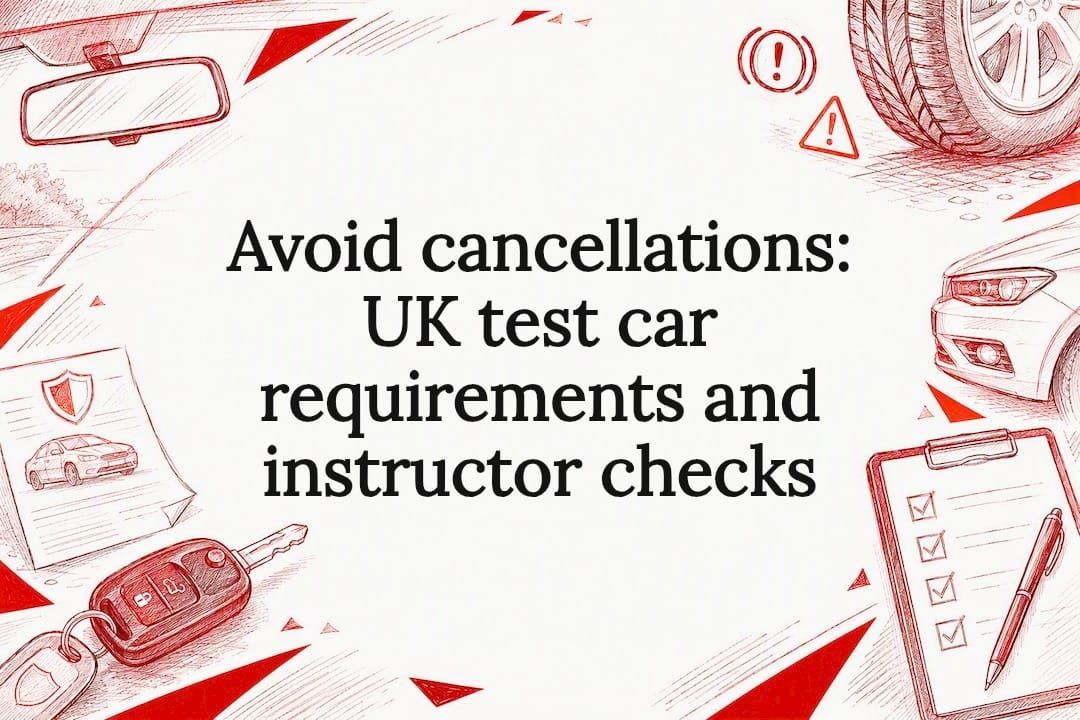
Yes, you can take your driving test in your own car, provided it meets DVSA test car requirements: taxed, insured specifically for the test, MOT'd if it's over three years old, and free of dashboard warning lights or illegal tyres. Fail any of these on arrival and the examiner cancels the test on the spot. You lose the fee, and you go home without a result.
Key Points:
- Your car must be taxed, insured for the test, MOT'd if over three years old, and free of warning lights or illegal tyres to avoid immediate cancellation.
- The examiner checks for warning lights, tyre tread, speedometer functionality, vehicle capability, and proper placement of accessories before starting the test.
- Insurance must explicitly cover the person taking the test, and proof of MOT, tax, and recall status is required for test approval.
- Modern safety features like ABS and traction control are permitted, but autonomous driving modes and interior dashcam filming are not during the test.
- Vehicles with poor visibility or observation issues, such as certain convertibles or models with thick rear pillars, are often refused, making vehicle choice crucial.
Table of Contents
- DVSA vehicle checklist: what the examiner checks before you even start the engine
- Documents and proof you must bring: tax, MOT, insurance and recall fixes
- Vehicle features, driver aids and dashcam rules
- Which cars are commonly refused, and why examiners have final say
- Pre-test checks: your day-of checklist
- What Costello's Driving School sees on test day, and how to avoid it
- Whose car should you actually use?
- Costello's test-day support: mock tests, guaranteed pass and final vehicle checks
- Sources
- FAQ
DVSA vehicle checklist: what the examiner checks before you even start the engine
The examiner walks round your car before you touch the ignition, and this inspection follows a fixed set of rules under the Minimum Test Vehicle standard. Fail one item and the test doesn't happen.
Here's what gets checked:
- Warning lights : no illuminated dashboard lights for airbags, ABS, or other safety systems. A lit light means an automatic refusal, no exceptions.
- Tyres : legal tread depth on all tyres, no cuts or bulges, and no space-saver spare fitted as a running tyre.
- Speedometer : must be factory fitted and display in mph.
- Vehicle capability : four wheels, a maximum authorised mass of 3,500kg or under, and the ability to reach at least 62mph.
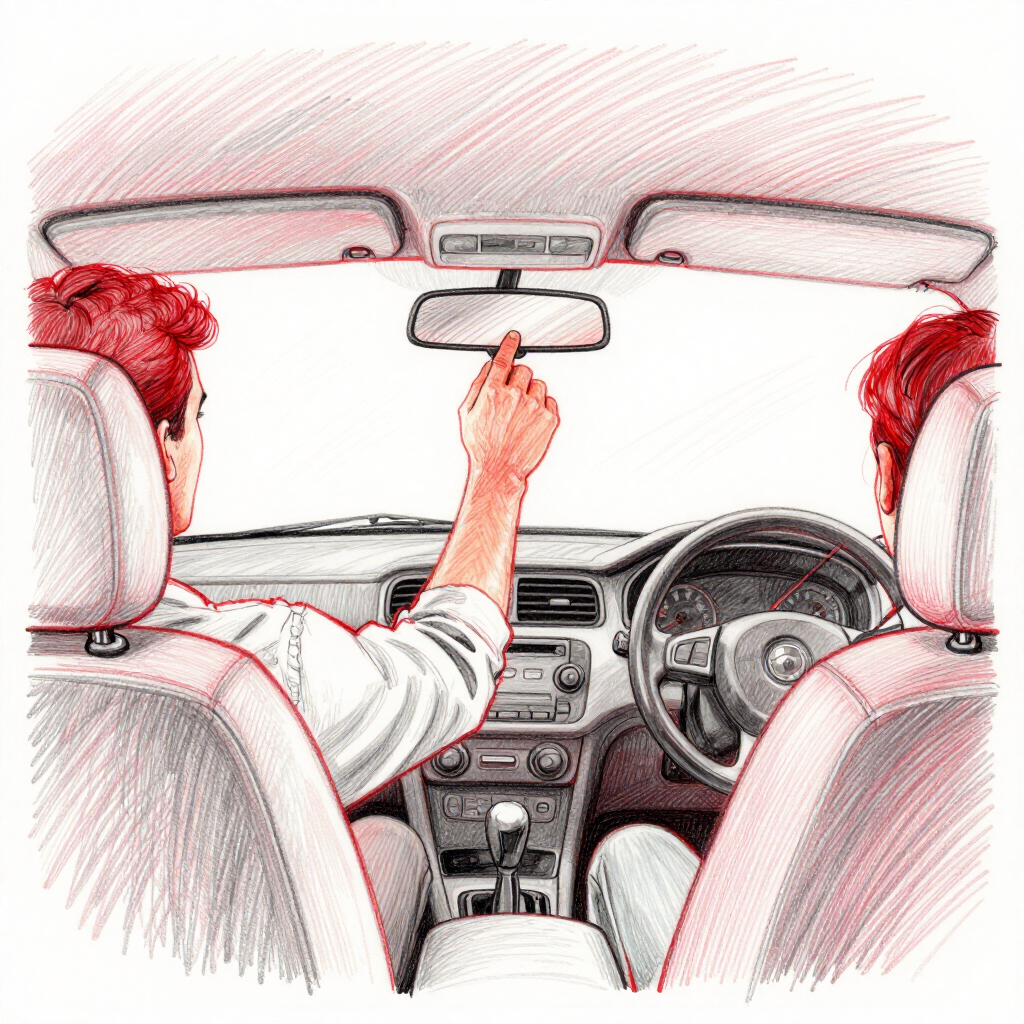
- Extra interior mirror : fitted for the examiner, positioned so it doesn't block your view or interfere with airbag deployment.
- Seatbelt and head restraint : both must be present and properly fitted for the front passenger seat. A slip-on head restraint cushion doesn't count.
- L-plates : displayed clearly on the front and rear (D-plates in Wales).
Checking tyre tread takes thirty seconds: the 20p test works fine, insert a coin into the main grooves and if you can see the outer band, the tread is too worn. Warning lights are even quicker. Start the engine, let the dashboard cycle through its checks, and confirm everything clears within a few seconds.
Pro Tip: A cheap stick-on or suction mirror from any motor accessory shop satisfies the examiner mirror rule. Position it low on the windscreen, angled towards the rear seats, so it doesn't obstruct your own view or sit in the airbag's deployment path.
Documents and proof you must bring: tax, MOT, insurance and recall fixes
Paperwork failures cancel just as many tests as mechanical ones, and they're entirely avoidable. Bring these:
- MOT evidence , if your car is over three years old. The examiner can check the official MOT history online, but carrying a screenshot saves time if the system is slow.
- Vehicle tax proof . Tax is checked digitally too, so make sure the vehicle is actually taxed under your name or the registered keeper's before the day, not just "on its way".
- Insurance confirmation , in writing, that explicitly names the driving test. Standard learner policies don't always cover this automatically. Get written confirmation from your insurer, or check the learner insurance rules before booking temporary test-day cover, which specialist providers offer from around £25 a day, according to motoring guides.
- Recall proof , if your car has an open manufacturer recall. A dealer letter, stamped service paperwork, or a screenshot from the official recall checker will do. If you're unsure whether a recall applies, ring the test centre before the day rather than guessing.
Vehicle features, driver aids and dashcam rules
Modern cars come loaded with technology, and the DVSA has clear lines on what stays switched on and what doesn't. Getting this wrong on the day causes confusion nobody needs before a test.
Permitted throughout the test:
- ABS and traction control
- Hill-start assist
- Parking sensors (audible or visual warnings only)
Not permitted during manoeuvres or independent driving:
- Self-parking systems. You must complete every manoeuvre using your own steering and observation.
- Autonomous or semi-autonomous driving modes.
- A personal satnav running during the independent driving section (the examiner supplies their own directions or uses a DVSA-provided device).
Dashcams cause more confusion than almost anything else on this list. A forward-facing dashcam is fine and doesn't need to be removed. What's not allowed is anything that films inside the car or records audio during the test, so if your dashcam has a rear-facing or interior lens, disable it or turn it fully towards the windscreen before you arrive. As the DVSA's examiner guidance makes clear, the examiner's ability to observe you and the road matters more than any single feature, and that principle extends to window tints too. Heavily tinted rear windows can obstruct the examiner's view during reversing manoeuvres, so if your car has aftermarket tints fitted, check with the test centre first.
Which cars are commonly refused, and why examiners have final say
The DVSA doesn't publish an exhaustive banned list, but its examiner guidance names several categories that regularly get turned away:
- Panel vans and other commercial vehicles without rear side windows
- Certain convertibles, particularly when the roof design limits rear visibility
- Small two-door models with thick rear pillars or a high waistline that blocks the examiner's sightline
The common thread is observation. If an examiner can't see clearly out of the back or side of the car, from the passenger seat, at exactly the angle a driving examiner needs to judge your mirror checks and reversing, the car gets refused, regardless of how roadworthy it otherwise is. This is examiner discretion, not a fixed list, so a borderline vehicle, a coupé with a sloped roofline, for instance, might pass in one examiner's judgement and not another's. Ring the test centre ahead of time if you're at all unsure.
**Illuminated warning lights, worn or illegal tyres, and missing test-specific insurance remain the most frequently cited reasons for on-the-day cancellations, according to independent motoring analysis. None of these require a mechanic to fix. They require you to check the car the night before.
Pre-test checks: your day-of checklist
Run through this the night before and again on the morning:
- Confirm tax and MOT status online.
- Check your insurance names the test explicitly, and bring the confirmation.
- Start the engine and watch for warning lights.
- Check tread depth and tyre condition on all four tyres, plus the spare if fitted.
- Fit L-plates front and rear.
- Fit or check the extra interior mirror.
- Bring recall paperwork if it applies to your vehicle.
- Clear rubbish, air fresheners dangling from mirrors, and loose items from the footwells.
On arrival, the examiner runs their own checks before the test starts. If your car fails any of them, the test is cancelled immediately, and the fee is lost, so Ready to Pass is blunt about this: the responsibility for a compliant vehicle sits with the candidate, not the examiner. If you pass, someone insured and licensed needs to be ready to drive the car away, since many learner policies don't automatically convert to full cover the moment you get your licence.
Pro Tip: Keep digital copies of your MOT, tax, and insurance confirmation on your phone, plus a charger in the car. A dead battery at the test centre, on the one day it matters, happens more often than you'd think.
What Costello's Driving School sees on test day, and how to avoid it
After 25 years teaching across Essex and Suffolk, the pattern repeats: warning lights left unchecked, insurance wording that doesn't mention the test, and tyres nobody looked at in months. Instructors fit the examiner's mirror low and angled, confirm insurance wording in writing before booking, and run a full vehicle check the lesson before test day. A mock test in the actual car you'll use catches problems while there's still time to fix them.
— Dean
Whose car should you actually use?
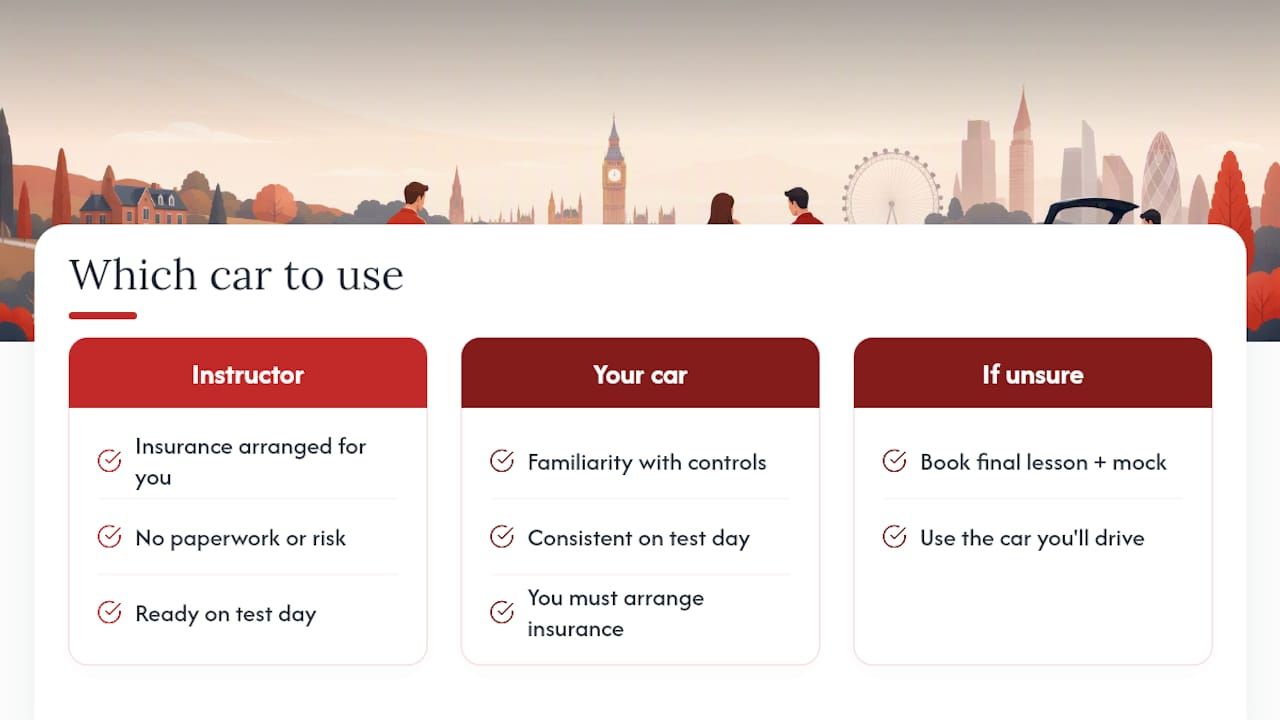
If you're anxious about cancellations, an instructor's car removes the insurance and paperwork risk entirely, since it's arranged for you. Your own car makes sense if you've learned in it and want consistency on the day. Still unsure? Book a final lesson and a mock test in whichever car you'll actually drive on the day.
Costello's test-day support: mock tests, guaranteed pass and final vehicle checks
If any of this feels like a lot to track alone, that's exactly what a final lesson before test day is for. Costello's Driving School runs full vehicle checks, mock tests in the same car you'll use on the day, and offers the Guaranteed Pass Course for learners who want structured, no-surprises preparation right up to the test itself.
Instructors teach in modern dual-controlled vehicles and know the quirks of local test centres, from which manoeuvres examiners favour to which routes catch learners out. That local knowledge, combined with a final check of your tyres, warning lights, and insurance wording before you book, is the difference between walking in confident and finding out the hard way. If you're within a few weeks of your test date, book a lesson or a final mock run to get the car, and yourself, properly ready.
Sources
FAQ
What are the rules for test driving a car in the UK?
Your car must be taxed, insured specifically for the driving test, have a valid MOT if it's over three years old, and pass the examiner's on-the-spot check for warning lights, tyres, and mirrors.
Can a 23-year-old use a friend's car for their driving test?
Age isn't the deciding factor. Anyone can use a car for their test provided it meets the DVSA's vehicle requirements and the insurance policy explicitly covers the person taking the test, not just the friend who owns the car.
What happens if my car fails the vehicle check?
The examiner cancels the test immediately and you lose the test fee, so it's worth running through the checklist the night before to avoid this entirely.
Do I need special insurance to take my driving test in my own car?
Yes. Standard learner insurance doesn't always cover the practical test automatically, so get written confirmation from your insurer or check temporary test-day cover if your current policy doesn't explicitly mention it.
How much does it cost if my test gets cancelled for vehicle issues?
You lose the full test fee, which currently sits at £62 on a weekday, with higher fees for evening and weekend slots.
Recommended